


Rather than broadening in scale from its predecessor, “28 Years Later: The Bone Temple” narrows its focus. Director Nia DaCosta, best known for directing “The Marvels” and “Hedda,” teams up with writer Alex Garland to approach the “zombie apocalypse” horror genre from a unique angle. Somehow, this January blockbuster serves as a metaphor for the benefits of therapy, imploring the viewer to consider their own psychological damage.
Set just hours after the ending of “28 Years Later,” the film takes place in a Britain defined by isolation. The main character, 12-year-old Spike (Alfie Williams), is from the island community of Lindisfarne, which is physically separated from mainland England by a causeway that is submerged under the North Sea during high tide. This isolation extends figuratively, with Spike failing to be seen as an equal by anyone except for the eccentric Dr. Ian Kelson (Ralph Fiennes). “28 Years Later: The Bone Temple” could stand on its own. Even though the film continues the emotional weight from previous entries in the franchise, albeit with a more clearly restrained scope, it feels harsher than anything we’ve seen so far. There is more directly confrontational violence, especially from the charismatic and deeply chilling Sir Lord Jimmy Crystal (Jack O’Connell) and his cult-like followers, the Fingers. Still, underneath its severity and occasionally unwieldy nature, “28 Years Later: The Bone Temple” offers a surprisingly humane argument, asserting that personal connection is the only path forward in a world defined by death and infection.
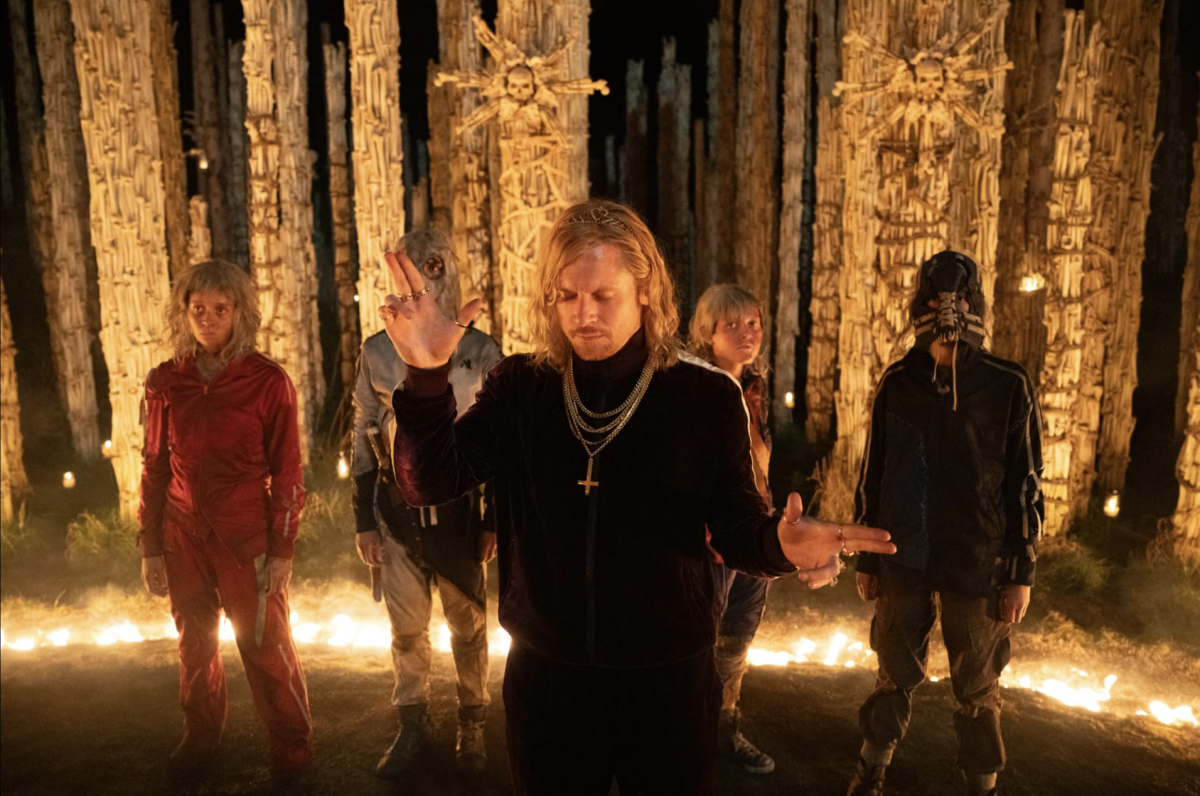
From the beginning, DaCosta and Garland choose to move Spike away from being an outright protagonist. Spike is quickly absorbed into the Fingers, leaving him to witness the violence of this gang, repeatedly forced to watch brutal events without having the power to intervene. This decision produces one of the film’s most prominent limitations, though, as Spike’s arc here is fairly nonexistent, and he loses the confidence we watched him flaunt at the finale of “28 Years Later.” This passive nature can definitely be frustrating, but giving more screentime to Sir Lord Jimmy opens up new angles for DaCosta to consider. Although the group often provides black humor — including all members being named some derivation of Jimmy, like Jimmy Ink (Erin Kellyman) and Jimmima (Emma Laird) — Sir Lord Jimmy is genuinely terrifying because of the way he weaponizes his followers’ belief in him.
O’Connell, who you might recognize as Remmick from “Sinners,” plays Sir Jimmy theatrically and almost too over the top, but the on-screen violence he orchestrates is the complete opposite and even difficult to endure at times. Although the grotesque nature of the violence thematically aligns with Garland’s critique of “cult logic,” one such scene is drawn out to the point that it slows down the narrative’s momentum and is one of the few moments where the film loses its rhythm.
Still, “28 Years Later: The Bone Temple” distances itself from expectations in its parallel storyline following Dr. Kelson and Samson (Chi Lewis-Parry), or the Alpha. Samson is an Infected — the franchise’s antagonistic characters, infected by the Rage Virus — that has grown to a size beyond human capabilities. Oddly, this relationship forms the film’s emotional and symbolic core, as Kelson takes a peaceful approach to Samson, a mindset rarely found in real-world scenarios. Kelson chooses to observe and attempt to communicate with Samson, all because of his belief that the Infected are still humans despite their brutal nature. Kelson treats Samson as a patient rather than a monster and develops a hypothesis that the Rage Virus, which has devastated England, actually causes a form of psychosis in its victims. Although this idea does feel slightly too neat conceptually, the film’s willingness to understand the implications of this diagnosis adds an unexpected weight; Viewers see multiple scenes from Samson’s point of view to witness the effects of the virus for themselves.
As you might expect from the title, the Bone Temple itself returns after its first appearance in “28 Years Later,” acting as both a visual and symbolic landmark. While it does lack the shock factor from its surprise appearance last time, the monument is the backdrop for an effective final act that brings the film’s disparate threads together. This finale has something for everyone, including a masterfully choreographed dance from Dr. Kelson. Importantly, the film resists falling into the trap of perfectly neat closure, instead allowing its leads to move forward into the upcoming third entry in this new trilogy, wounded and uncertain, but still soldiering on. Just like “28 Years Later,” “The Bone Temple” ends with a cliffhanger, reintroducing old characters and setting up what promises to be both an exhilarating and emotional final film.
On a technical level, the film is similar to its predecessors’ capability but maybe falls slightly below the exceptional craft that defined the last installment. A notable exception here is the aforementioned dance scene, which is an early contender for my favorite scene of 2026, as DaCosta masterfully whips the camera around, nearly overwhelming the viewer in an inferno of fiery goodness, backed by an Iron Maiden needle drop.
In the end, “28 Years Later: The Bone Temple” may be a bit messier and more uneven than its predecessor, but it still works extremely well in its own right, largely because DaCosta adds her unique spice to the franchise instead of attempting her best Danny Boyle impression. This sequel is intellectually active, and, although it may not redefine the genre, its ambition alone makes it a worthy continuation of a series that is quickly finding a place among the all-time horror greats.


