
The 68th Grammy Awards were not a quiet night, nor were they neutral. With uneven production and mixing, bold performances, historic wins and unmistakable political messaging, this year’s show made it clear that immigrants are not simply a part of American culture — they are actively creating it, shaping it and being rewarded for it at the highest level.
The night opened with an uneven performance, with Rosé and Bruno Mars’ performance of “APT.” lacking overall sound clarity despite an energetic and uniquely rock rendition of the hit song. Technical issues continued throughout the show, creating a sense of disorder that contrasted sharply with the significance and solemnity of many of the wins that followed.
Despite issues, standout performances cut through the noise. Sabrina Carpenter’s rendition of “Manchild” was pure fun. It was playful, theatrical and distinctly her brand. Complete with a full hyperrealistic airplane set, it leaned into the maximalism of the pop industry and succeeded because of it. A surprise solo performance of Bruno Mars’ newest “I Just Might” was, as expected, polished and reliable, reinforcing his place as one of pop music’s most consistent performers.
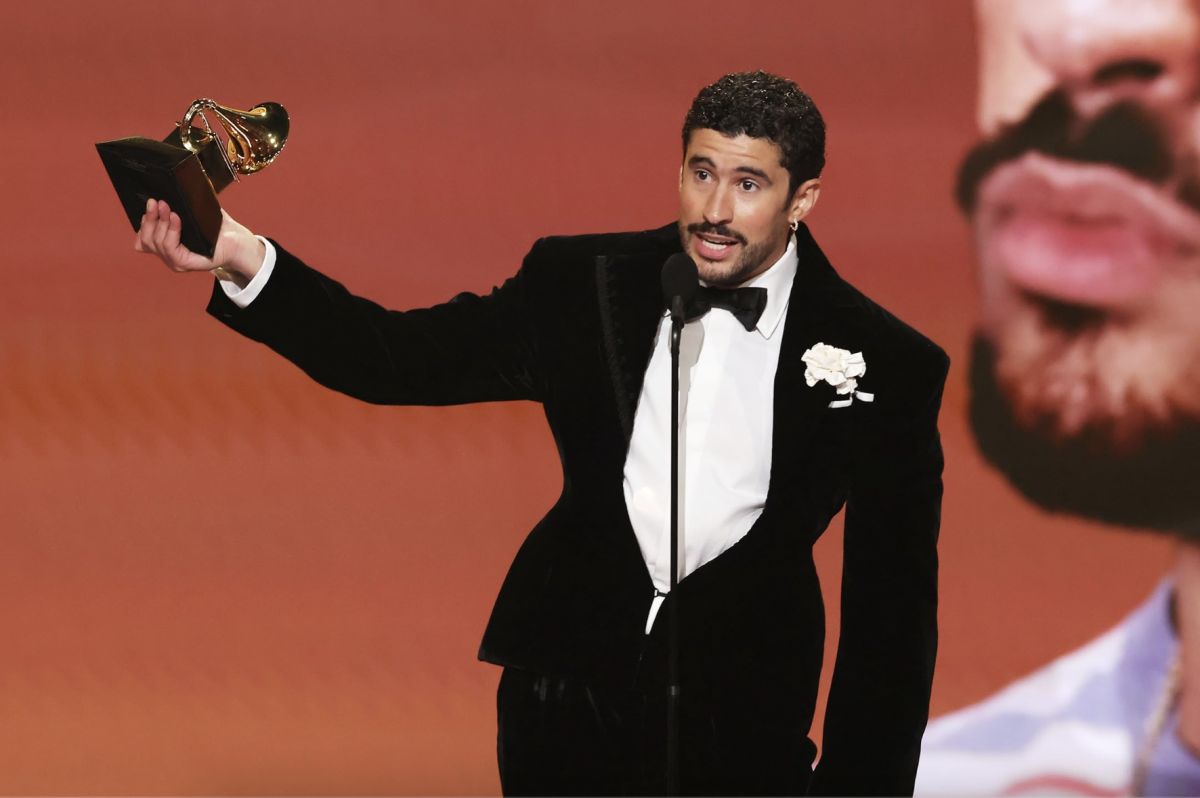
Justin Bieber’s experimental performance of “Yukon,” built around live looping, was musically interesting but visually confusing, particularly with his decision to perform clad in just boxers and socks. Bad Bunny, by contrast, delivered confidence and intention at every turn, commanding the attention of the room, despite not performing due to a non-compete with the Super Bowl halftime show.
Kendrick Lamar won Best Rap Album, becoming the rapper with the most Grammy wins in history with a total of 27, surpassing Jay-Z by two wins. Tyler, the Creator delivered a visually compelling performance filled with Hitchcock references, blending new and older material in a way that highlighted his artistic evolution.
The Best New Artist segment was perhaps the most chaotic yet interesting portion of the ceremony. Addison Rae made an unconventional and standout choice with her “Fame Is a Gun” performance, singing and strutting through the song from outside the venue. Katseye’s decision to perform “Gnarly” was especially interesting; the Grammys are often used by Best New Artist nominees as an opportunity to introduce themselves to a wider audience and solidify their place within the industry, so choosing such a critically divisive track felt bold and intentional. Their presence was historic: They are the first girl group to perform at the Grammys in 24 years.
More importantly, Katseye represents exactly what this year’s Grammys were about. With members from multiple cultural backgrounds, they reflect a globalized generation of pop — one that audiences not only accept but actively crave. Their performance underscores how diversity is no longer a novelty or exception in the music industry: It is the engine driving it forward.
Leon Thomas’s performance of “Mutt” was well received, as were Lola Young’s emotionally raw performance of “Messy” and Sombr’s set, all of which seemed to resonate with audiences. Though Lola Young’s later win for Pop Solo Performance was a shock, given that “Messy” marked her breakout song, it felt like a representation of how quickly new voices are reshaping pop music.
Olivia Dean ultimately won Best New Artist — a victory that felt like the emotional climax of the night. Her performance was perfectly balanced — soulful, youthful and somehow grounded. In her acceptance speech, she stated that she was a granddaughter of immigrants and commended the bravery of immigrants. It was not framed as a political talking point, but rather a simple truth. Her win embodied the larger message of the night, that immigrant stories are not peripheral to success in the music industry; they are foundational to it.
Billie Eilish’s win for Song of the Year with “Wildflower” was one of the night’s most surprising results. Though the album was released in 2024, the song was rereleased as a single in February 2025, making it eligible for the Grammys this year. Her acceptance speech opened with the line, “No one is illegal on stolen land,” and directly addressed immigration and land rights, boldly declaring “fuck ICE,” as she walked off the stage.
Bad Bunny’s wins cemented the night’s thesis. He first won Best Música Urbana Album for “Debí Tirar Más Fotos,” opening his speech with “ICE out” and underscoring the humanity of immigrants, especially Hispanic immigrants. The same album later won Album of the Year, becoming the first fully Spanish-language album to ever win the category. His final speech, delivered almost entirely in Spanish, felt like an intentional refusal to dilute his identity for the room.
Throughout the ceremony, artists and attendees wore “ICE Out” pins, a visible show of solidarity with immigrant communities throughout the United States. Award shows may strive to exist outside of the political moment explicitly, but this year’s Grammys wholeheartedly rejected that illusion. Instead, they presented a reality that could not be ignored. Immigrants are not only here, but they are actively shaping sound, setting trends and defining what pop culture looks like next. The 68th Grammy Awards did not just celebrate diversity: They proved that diversity is already the heart of the industry itself.