
The Georgetown University Student Association (GUSA) released a petition Oct. 22 urging the Council of the District of Columbia to pass legislation that would cap resold ticket prices for live music shows, citing accessibility concerns.
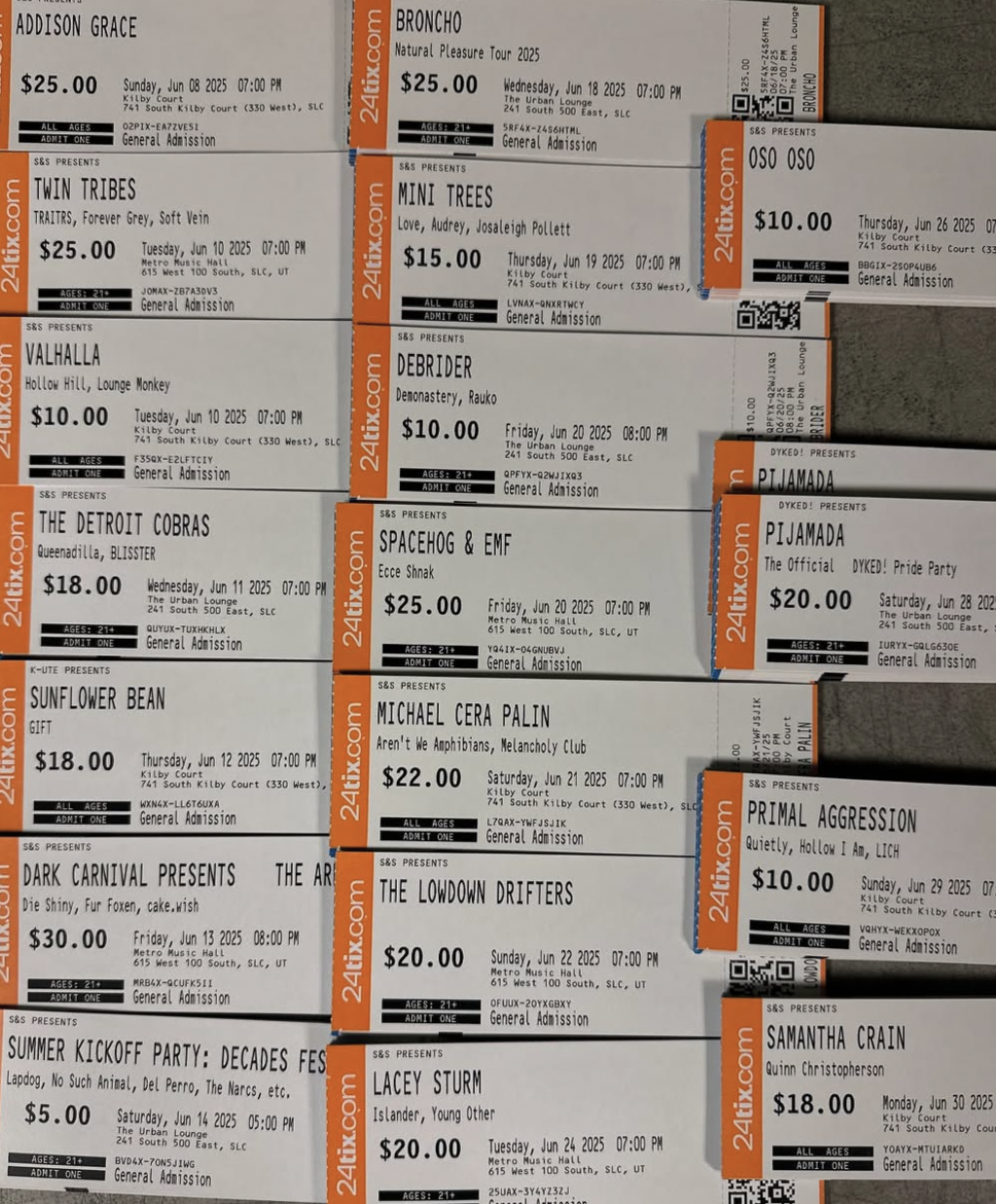
The Restricting Egregious Scalping Against Live Entertainment Amendment Act (RESALE) would limit resold ticket prices to up to 10% greater than the original ticket price, fine violators up to $10,000 and require ticket sellers to refund tickets upon cancellation. The Council is currently considering the bill after an Oct. 22 public hearing.
Tina Solki (SFS ’26), a GUSA senator who spearheaded efforts to support the legislation, said the bill would be beneficial to college students and many D.C.-Maryland-Virginia (DMV) residents.
“The overall goal of the act is to make D.C.’s culture, via live performance, more accessible to everyday people who don’t have the means, or the technology, or the time, or frankly, the patience, to put up with ticket resale and ticket gouging,” Solki told The Hoya.
In its endorsement of the bill, GUSA wrote that ticket speculation creates a spike in ticket resale prices that prevents some students from engaging with local communities.
“We come to Georgetown from every corner of the country,” the endorsement says. “Many Georgetown students come from privilege; many don’t. Many are here on financial aid, working multiple jobs, or sending money home. For these students, the difference between a $50 ticket and a $150 resale price is the difference between participating in D.C.’s culture and watching from the outside.”
GUSA President Ethan Henshaw (CAS ’26) said the legislation would help establish connections between students and locals.
“The RESALE Act seemed like a way of externally being able to create community within D.C., because if you start limiting price-gouging on tickets, students can now engage with significantly more live art, and it just seemed like something that would matter to students,” Henshaw told The Hoya.
Saahil Rao (SFS ’27), a GUSA senator who supported the endorsement, said GUSA members hoped its endorsement would help garner support for the legislation.
“Show the D.C. Council that one of D.C.’s largest universities’ students are behind it — it doesn’t cost us anything to sign something saying, ‘something that I think all students think is good,’ is good,” Rao told The Hoya.
Henshaw said D.C. legislators should recognize the strength of student support.
“I think it’s very positive when public officials see student support for legislation like this,” Henshaw said. “I think having young people come out and offer testimony in a way that they usually don’t — it’s just a very persuasive tactic in making sure that they know that student support is out here behind this.”
GUSA Senator Han Li (CAS ’27) said GUSA decided to endorse the bill in the hopes of allowing all students to participate in D.C. events, regardless of their disposable income.
“One key motivation for this statement, and for any GUSA action in support of this policy in general, was the goal of pursuing equity in student experiences for students from various backgrounds,” Li wrote to The Hoya.
Solki said every student should be able to engage in off-campus activities.
“The letter was written specifically from the perspective of Georgetown students,” Solki said. “It was signed by the GUSA executive and senate at the time, and it was basically saying, ‘Hey, we know that a lot of students come from privilege but a lot of us do not; a lot of students want to be able to get off campus and engage with their city; this is a really, really powerful way that we can do it.’”
Henshaw said decreasing ticket prices would improve his life, and he believes the same is true for other students.
“If I knew that I could go to a concert for half the price because the prices aren’t being gouged and jacked up anymore, that would be very game-changing,” Henshaw said. “I would be able to have a lot more fun off-campus, and I think a lot of other students can relate to that.”