
Activists and students convened for Georgetown University’s 27th annual Cardinal O’Connor Conference on Life (OCC), the largest student-run anti-abortion conference in the United States, on Jan. 24, while over a dozen Georgetown students protested in Red Square.
This year’s conference — presented by Georgetown Right to Life, an officially recognized anti-abortion student group, and Knights of Columbus, a university-recognized Catholic fraternity group — aimed to raise awareness about advocacy for anti-abortion rights after birth. During the conference, members of H*yas for Choice (HFC), a abortion- and reproductive-rights student advocacy organization not recognized by the university, demonstrated against Georgetown’s support for OCC, the first protest against the conference since 2023.

Elizabeth Oliver (CAS ’26), the conference co-director and RTL president, said university support was essential for OCC.
“We are immensely grateful for the support we receive from the university,” Oliver told The Hoya. “We receive support from the president’s office, provost’s office, many other departments, a great deal of support from Campus Ministry and Catholic life. So we really couldn’t do this conference without them and Georgetown.”
The conference, titled “The Pro-Life Mission After-Birth: A Lifelong Devotion,” included a keynote address from Jennie Bradley Lichter, the president of the March for Life Education and Defense Fund, which organizes the annual anti-abortion March for Life in Washington, D.C., and breakout sessions with anti-abortion rights activists and scholars.
Lichter said despite the rise of restrictions on abortion nationwide, anti-abortion rights activists still contend with increasing medication abortion and celebrity support of abortion rights.
“We shouldn’t kid ourselves that everything is rosy and we shouldn’t be too quick to pat ourselves on the back,” Lichter said in her speech. “Abortion rates have actually been rising with the rise of the chemical abortion pill and how easily it’s accessed. Our culture is still deeply unprecedented. Every time we turn around, there’s another actress saying that she owes her acting career to her abortion, or a pop star singing that her friends with kids look like they’re in hell.”
Interim University President Robert M. Groves also presented the University of Mary Collegiates for Life, a student group from the Catholic university in Bismarck, N.D., with the Rev. Thomas King, S.J., Award, which recognizes an anti-abortion college group with $1,000.
A university spokesperson said the conference is student-run and reflects an exchange of ideas from all perspectives.
“Georgetown University is proud to be a university that deeply values our faith tradition and that encourages the free and open exchange of ideas,” the spokesperson wrote to The Hoya. “We are committed to being an inclusive campus and community that welcomes people of all faiths, races, ethnicities, sexualities, gender identities, abilities and backgrounds. The University works to engage with the plurality of voices that exist among our students, faculty and staff.”
Outside of the conference, about 15 HFC protesters gathered in Red Square around 11 a.m. with signs that displayed slogans such as “Abortion is healthcare” and “Georgetown is a pro-choice campus.”
Ava Lewis (CAS ’28), one of the protesters, said the Georgetown community supports abortion rights, despite the university hosting the conference.
“We’re showing up to show that Georgetown is a pro-choice campus and to show that we don’t agree with the harmful rhetoric that the Cardinal O’Connor Conference stands for,” Lewis told The Hoya. “And to show our support for people who might feel targeted by the rhetoric from the conference, because there are probably students who have had to seek out abortion care before, and this could be a trigger for them.”
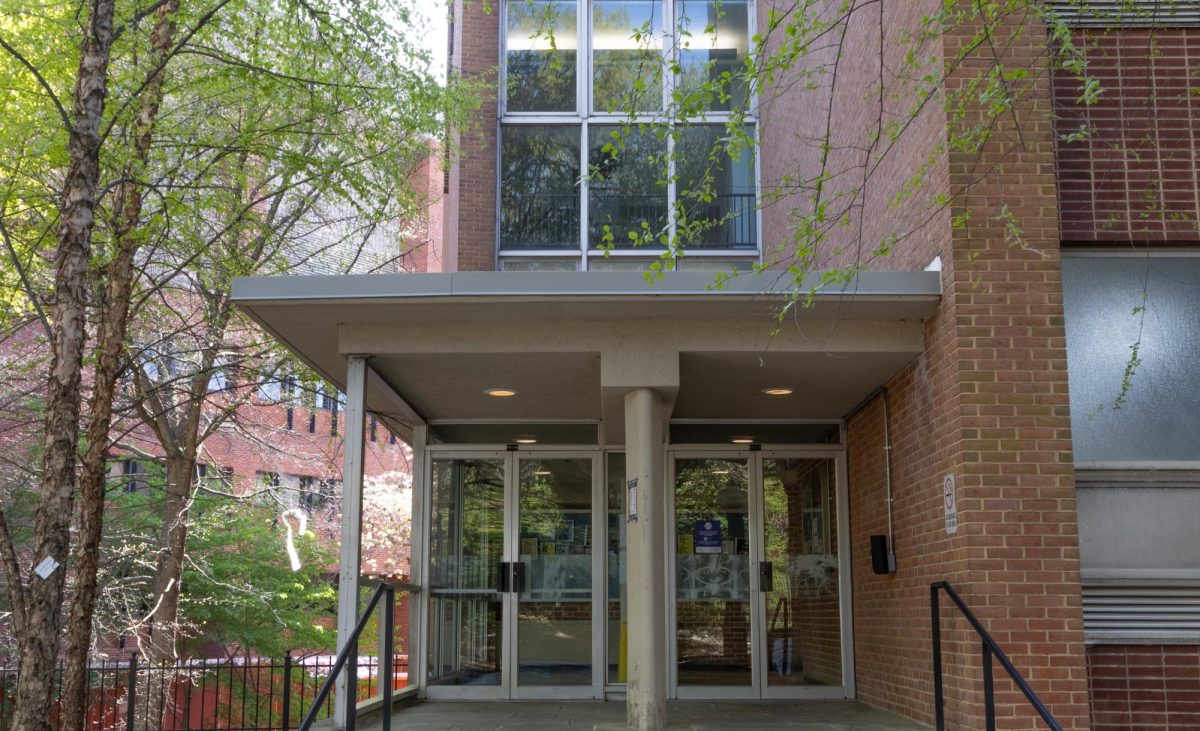
Though the protest largely avoided conflict, protesters and OCC organizers engaged in multiple verbal confrontations outside of the Intercultural Center. RTL members commented on the size of HFC’s group and invited demonstrators — who responded with chants, including “Not your body, not your choice” and “Keep your rosaries off my ovaries” — inside the conference.
Sydney Hudson (CAS ’26), an HFC member, said the group protested outside the conference to exercise their right to free speech and show support for pro-abortion students.
“The reason we try to organize is just because it feels helpless for students because one side is so supported by the university and funded by our tuition money and everything,” Hudson told The Hoya.
Oliver, who spoke with the protesters, criticized HFC turnout, saying it was proof that the Georgetown community does not support abortion rights.
“I do think they are realizing that Georgetown is a very pro-life school,” Oliver said. “We have a great deal of attendance, a lot of student volunteers. We are fully student-run. This is the 27th annual year, and when they see a small group of protesters, I think it proves our point that we are still a Catholic school, as much as some people like to deny it.”
While specific data about Georgetown students’ support for abortion rights is unavailable, the Pew Research Center found in 2024 that 76% of adults aged 18 to 29 believe abortion should be legal in all or most cases. The same study found that support increases among college-educated adults, and a majority of Catholics support access to abortion.
Sophie Samson (SOH ’27), HFC’s co-director of advocacy and organizing, who also attended the protest, said HFC members avoid interacting with conference attendees.
“We were just doing our chants, exercising our right to free speech, and they tried to say something back to us, but we choose not to engage because we choose not to make abortion a debate,” Samson told The Hoya.

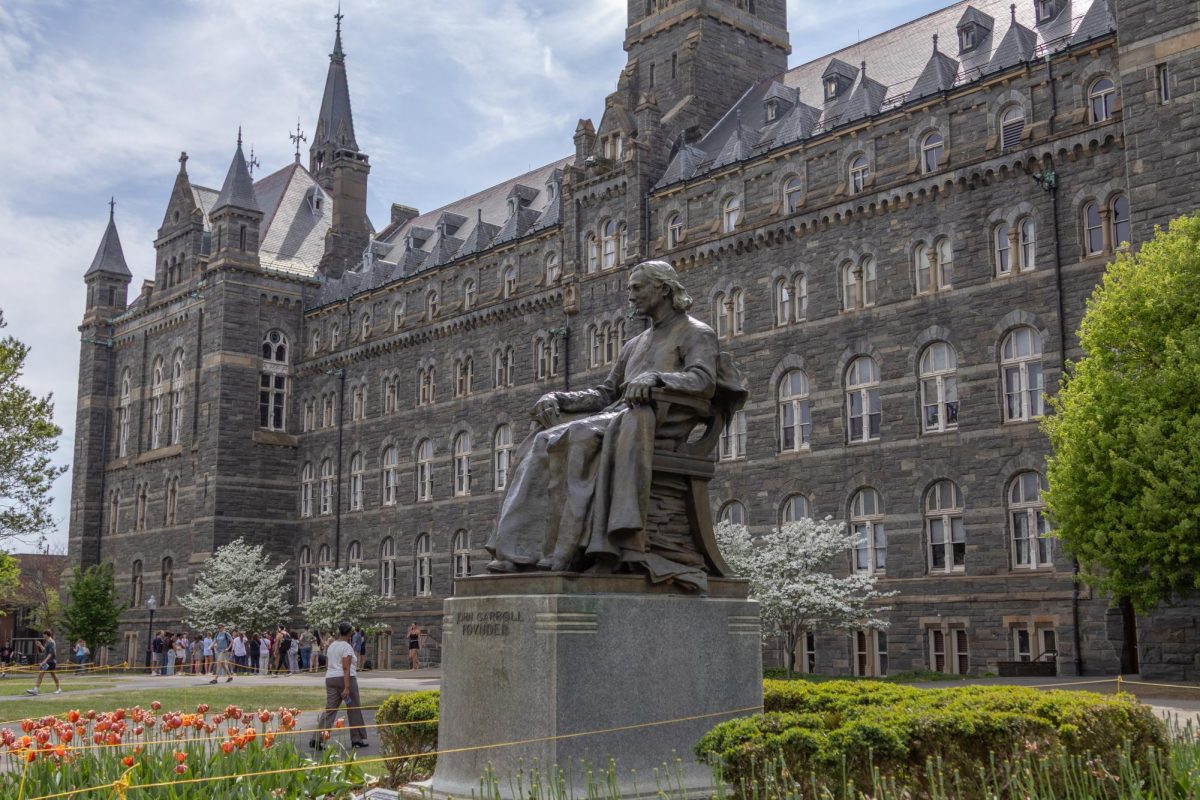
Shae McInnis (CAS ’28), a volunteer coordinator for OCC, said the conference represents Georgetown’s founding values.
“Georgetown University has always stood for the values that it was founded upon,” McInnis told The Hoya. “Which are values rooted in the Catholic religion and the Jesuit order protecting the human dignity of all people has always been core, and so from conception to natural death, it’s encouraging that Georgetown will always stand for the same.”
The university spokesperson said Georgetown respects its Jesuit tradition.
“Georgetown is firmly committed to the Catholic Church’s teachings and values, including those about the sanctity and dignity of life, and we strongly support a climate that continues to provide students with new and deeper contexts for engaging with our Catholic tradition and Jesuit identity,” the spokesperson wrote.
Lewis said Georgetown’s position on abortion rights is discouraging to students, especially female students.
“They definitely privilege the pro-life side, and I feel like supporting that side makes it seem like you don’t support women in general,” Lewis said. “And considering the majority of the student body is women, that’s disheartening as a student.”
The university officially recognized HFC in 1991 as GU Choice, over a year after the organization was founded as Hoyas for Choice. A year later, the university rescinded that recognition, and HFC has not received funding or official support from Georgetown since, prompting their name change to H*yas for Choice.
Jade Kraut (SFS ’28), HFC’s co-director of advocacy and organizing who organized a week of events for HFC leading up to the protest, said the group plans to continue advocating for reproductive rights at Georgetown, including tabling in Red Square and the Leavey Center.
“The fact that you can see a table that says ‘H*yas for Choice’ every single day in Leavey and here in Red Square, that’s so important to us,” Kraut told The Hoya. “We just are very, very happy that we can have this amazing community and that, even if Georgetown will not recognize us, we don’t really care.”
McInnis said it is important for Georgetown to take a firm stance on abortion.
“We’re in our nation’s capital,” McInnis said. “This is where all the laws, all the policies, are made, and for us, our school, to take such an active stance in this issue that’s so important to so many of our students here, important to the Catholic and Jesuit values that our institution is built on, and the fact that we can take such a prominent role in that is really wholesome and really inspiring.”