Georgetown University earned a “B” grade in its 2026 Anti-Defamation League (ADL) report card released March 10, the same grade it received in 2025.
The ADL, a nonprofit organization that works to combat antisemitism, annually evaluates universities and their campuses for antisemitism and anti-Zionism via public report cards that assess public administrative actions, campus Jewish life and campus behavior. Georgetown began at a “D” grade in 2024, but rose to a “B” the next year following university efforts to improve Jewish life on campus and mandating anti-discrimination training within campus organizations.
Josh Stevens, deputy director of ADL’s Washington, D.C. region, said ADL reviews the previous year when determining grades, and that Georgetown has overall impressed the organization.
“We’ve given Georgetown feedback annually on their report card grade based on the previous year that we’re assessing,” Stevens told The Hoya. “If certain incidents or certain things are happening throughout the year, we respond accordingly in real time — both positive and negative. The past year has been so great for Georgetown — I think that they’ve done so much that our discourse with them and our conversations have been positive.”
A university spokesperson declined to comment.
Rabbi Ilana Zietman, Georgetown’s director of Jewish life, said the university’s Jewish community is robust and applauded the Jewish experience on campus.
“Jewish life and academics are very strong at Georgetown,” Zietman told The Hoya. “We’re lucky to have an active and diverse community of Jewish students, staff and faculty at this university. While making up only about 5% of the student population, Jewish students know they are valued members of Georgetown.”
“I can confidently say that the Jewish community loves being part of this university and we are grateful for the relationships we have with communities and individuals of all backgrounds,” Zietman added “The ADL report reflects that genuine integration and celebration of Jewish life here at Georgetown.”
Abigail Assadi (CAS ’26) and Zach Samuel (SFS ’26), co-presidents of the Jewish Student Association, a student affinity group, said the university can still take specific steps, including expanding dining options and recognizing Jewish holidays, to further support Jewish students.
“There is always more that can be done to make Georgetown accessible and welcoming for Jews, including expanded kosher dining options and minimizing academic obligations during the Sabbath and other Jewish holidays,” Assadi and Samuel wrote jointly to The Hoya. “The most critical step that the university can take to strengthen Jewish life on campus is to engage in active, meaningful and sustained conversation with Jewish students.”
Assadi and Samuel added that they appreciate the university administration’s collaboration.
“We always welcome the opportunity to speak with the university administration, faith groups and student organizations on issues relating to Jewish life at Georgetown,” Assadi and Samuel wrote. “We’re grateful to have participated in many such conversations this year.”
Stevens said the university still faced traditionally antisemitic and anti-Zionist events, impacting Georgetown’s grade.
“There were still quite a few incidents that happened on your campus this year, and those things are unavoidable, but are still reflective of things that are happening that are campus climate,” Stevens said. “You did have swastikas found on pillars in Georgetown on the campus back in June. You did have posters advertising a Jewish candidate for student government that was vandalized with the word ‘Zionist’ on it.”
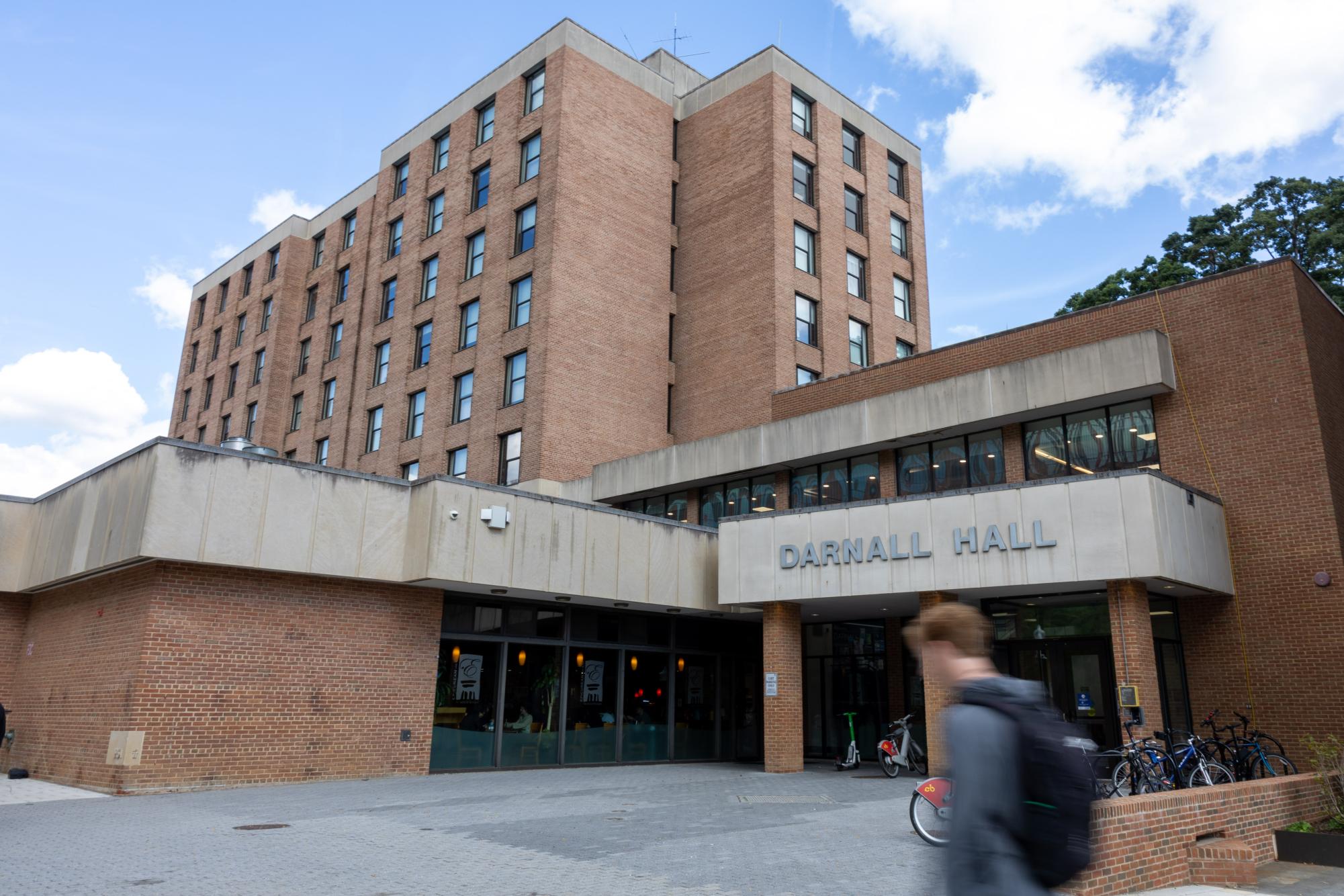
In April 2025, the university announced it was investigating antisemitic graffiti on a poster as a potential hate crime. Two months later, the Georgetown University Police Department (GUPD) discovered two Nazi swastikas etched into pillars at two residence halls. In July, interim President Robert M. Groves testified before a U.S. House of Representatives committee that Georgetown had not seen serious antisemitic violence.
Assadi and Samuel said some student speech has included anti-Zionist rhetoric, hurting Jewish students.
“Anti-Zionist activities certainly have occurred on Georgetown’s campus, including events, publications and speech self-labeled as anti-Zionist by their organizers,” Assadi and Samuel wrote. “There is debate within the Jewish community regarding the relationship between anti-Zionism and antisemitism. But by explicitly or implicitly rejecting and invalidating the beliefs of Jewish students, anti-Zionism may pose a challenge for Georgetown’s Jewish community.”
Antisemitism describes prejudice against Jewish people, while anti-Zionism opposes the political ideology that Israel should exist as a Jewish state. The term has also been broadly used to describe opposition to the Israeli government throughout the Israel-Hamas war.
ADL’s methodology for their report cards includes polling Jewish students on their perception of anti-Zionism and alleged anti-Zionist and antisemitic events on campus. ADL has faced criticism for conflating anti-Zionism and antisemitism.
Stevens said the ADL hopes to meet with the university, including incoming University President Eduardo Peñalver, who will assume his position in July, to review the report card, and that the ADL has already extended offers to meet with the university administration.
Zietman said she encourages the Georgetown community to engage with Jewish people at the university.
“I always want Georgetown students, faculty and staff to understand what their Jewish peers and colleagues experience and why, to approach us with genuine curiosity and a willingness to listen and understand us on our own terms,” Zietman said. “I encourage my students to approach all of their relationships on campus and beyond with that kind of empathy and hope others will do the same for us.”