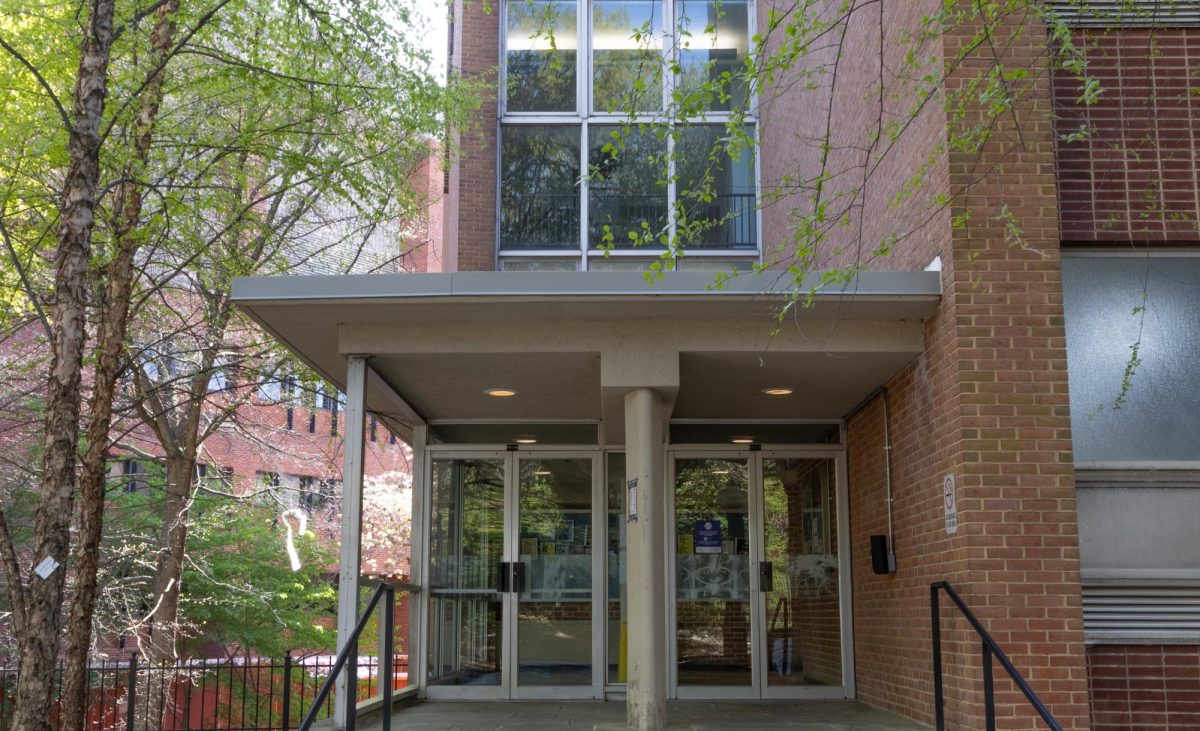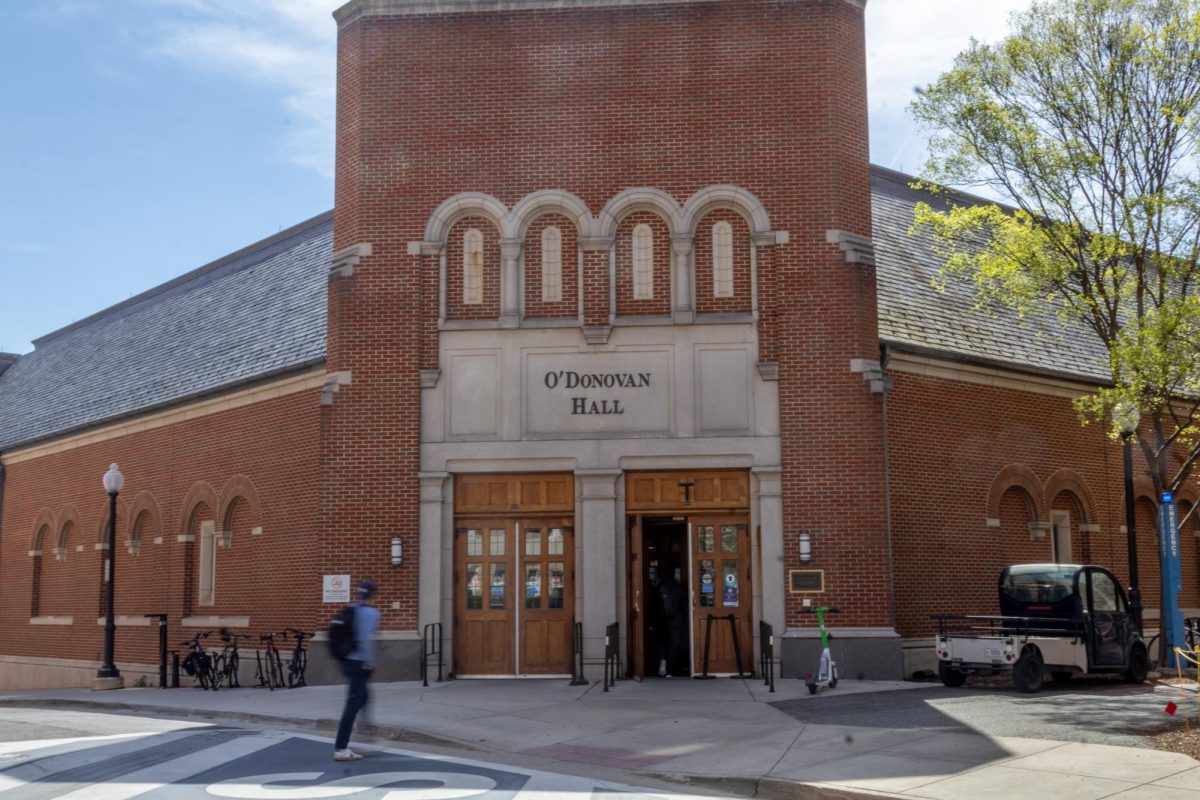

The Georgetown University Student Association (GUSA) Senate unanimously passed four bills at its Jan. 25 meeting that call on the university to extend building access, address issues with campus WiFi and improve maintenance in communal bathrooms.
One of the bills asks the university’s planning and facilities management department to regularly check shower heads and curtains in communal dorm bathrooms and submit work orders for broken shower heads and curtains. Another bill requests that the university expand GOCard access to the Rafik B. Hariri Building after 10 p.m. for students not enrolled in the McDonough School of Business (MSB), while a third calls on the university to publicize its efforts to improve campus WiFi.
Senator Sam Baghdadchi (CAS ʼ29), who introduced the communal bathrooms bill, said the bill augments facilities workers’ current system, in which they inspect shower curtains at the beginning of the school year.
“Shower heads are not checked out by custodial staff when they’re doing daily cleaning and shower curtains often need replacement,” Baghdadchi said at the meeting. “Shower curtains are looked at and replaced at the beginning of each school year, but this act is to work with the Department of Facilities and Management to develop a system, where midway through each semester, they will also be checked, just to make sure that we’re keeping things clean, maintained and there’s an actual system.”
The GUSA Senate also passed a bill calling on the university to expand the number of guest swipes available to students who purchase the unlimited meal plan.
The WiFi legislation calls on the university to announce a plan to improve SaxaNet and other guest WiFi networks on campus.
Sienna Lipton (CAS ʼ27), who introduced the bill, said the university has acknowledged issues with the WiFi and will begin replacing routers in most affected areas.
“There isn’t an exact instance that can be pointed to for why WiFi has gone so dramatically downhill this semester, but from my understanding, the university is aware that the WiFi is not up to par, so they’re working on replacements,” Lipton said at the meeting. “Right now, they talked about the first 12 places that are the worst. They’re working on replacing the routers to the next WiFi system.”
On Jan. 20, the university announced a partnership with Cisco, a multinational technology corporation, to deploy WiFi 7 on both the Hilltop and Capitol campuses. The plan will gradually implement the newest generation of wireless network technology over the next six years.
The senate also announced that Irene Kang (CAS ʼ29), Leah Abraham (SFS ʼ27) and Storm Dalberry (MSB ʼ29) will serve as legislative aides and assist with graphic design, technology and the Financial Appropriations committee, which allocates money to student organizations.
Senator Cameran Lane (CAS ʼ28) said he formed a new senate committee to begin working on advocating for the university to formally recognize Greek fraternities and sororities on campus.
“A select committee for Greek recognition has been formed,” Lane said. “If you were here in the last PAC meeting, it calls on the university to recognize some of our Greek organizations.”
GUSA President Darius Wagner (CAS ʼ27) said the door to the Intercultural Center (ICC), located next to the Jesuit Community Center Cemetery, will be open to students until 8 p.m. on the weekends, following a meeting with the university’s vice president of public safety.
“The ICC cemetery door will be open Saturday and Sunday through 8 a.m. to 8 p.m. after our meeting with the VP of safety,” Wagner said at the meeting.
Wagner said his administration is working with the university amid the Aramark contract negotiations to allow the Georgetown University Grilling Society (GUGS), a student group that sells grilled food, to accept Flex dollars.
“They had mentioned that there are also food safety, business verification terms that come with the Flex, because Flex is involved in our Aramark contract,” Wagner said. “And so that’s something that’s also been discussed in the new negotiations, but also that’s the current barrier to actually getting GUGS involved in Flex, because there’s no current technological system that we can use there.”
Lane said additional guest swipes will allow students to bring family members to campus more often.
“I think we deserve more,” Lane said. “Georgetown claims to care very much about our families, and families being here on the hilltop and being able to eat is a big factor, so I think this bill is relatively self-explanatory.”