
Georgetown University’s dining contract with food services management company Aramark is set to expire in 2027, prompting the university to solicit proposals from food service companies, a university spokesperson confirmed to The Hoya on Feb. 18.
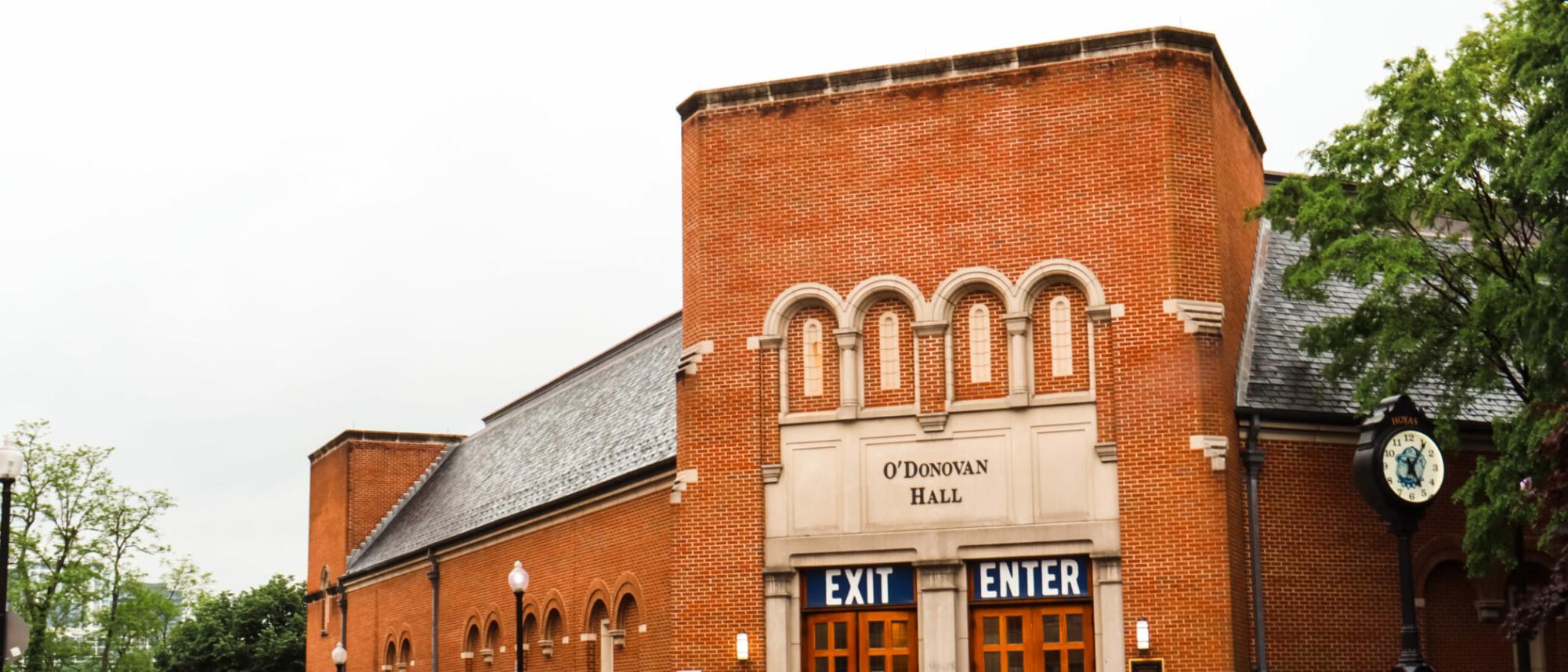
The university renewed its contract with Aramark in 2016, which prompted a renovation of the Leo J. O’Donovan Dining Hall and the food court in the Leavey Center. The contract renewal process has sparked student interest, reflecting past criticism of Aramark over allegations of profiting from prison food contracts and unfair labor practices.
A university spokesperson said Georgetown is taking proposals from potential dining providers and will involve input from the university’s various student groups through a review committee.
“Georgetown’s current contract with Aramark expires in 2027,” the spokesperson wrote to The Hoya. “The University is currently conducting a request-for-proposal (RFP) process to solicit proposals from food service providers for moving forward on July 1, 2027, after that expiration. This process includes student representatives — representing GUSA, GradGov, Georgetown Law and the Medical Center — who will have input into the selection of the provider.”
Elinor Clark (CAS ’27) — facilities team lead for the Georgetown Coalition for Workers’ Rights (GCWR), a student group that advocates for labor issues on campus — said she hopes the university will select a dining company without ethical controversies.
“Aramark is a large company that has a history of unfair labor practices and a relationship with the prison industrial complex, which the Coalition for Workers’ Rights does not support,” Clark told The Hoya. “We want to make sure that Georgetown is maintaining relationships with ethical companies.”
Aramark has previously provided food to U.S. Immigration and Customs Enforcement (ICE) detention centers, and also allegedly failed to provide incarcerated people with daily meals in order to increase profits.
An Aramark spokesperson said that while the company serves “justice-impacted” individuals, they are not contracted by the U.S. Customs and Border Protection (CBP), ICE or the U.S. Department of Homeland Security (DHS).
“Aramark serves justice-impacted individuals with meals that are designed by registered dietitians, and which follow local, state, and federal requirements and American Correctional Association (ACA) dietary guidelines,” the spokesperson told The Hoya. “Aramark does not, and has never had contracts with U.S. Customs and Border Protection (CBP), U.S. Immigration and Customs Enforcement (ICE), or the U.S. Department of Homeland Security (DHS) to provide food service to immigration detainees.”
Charles Marchetti (CAS ’28), a GCWR dining team co-lead, criticized Aramark’s involvement with ICE and prison systems, saying he hopes to see a less controversial dining provider.
“As of right now, we don’t support Aramark due to its connections to outside organizations, with ICE and prison labor and things of that nature,” Marchetti told The Hoya. “We would love to see the university work with a more ethical company. However, that comes with the caveat that workers retain all of their benefits, seniority and positions. Obviously, we recognize that Aramark is not a good partnership for the university to have, but we want any future partners to prioritize the workers’ conditions of life.”
Georgetown’s first contract with Aramark began in 2007, which prompted major renovations to the Leo J. O’Donovan Dining Hall and the opening of Epicurean & Co., a restaurant on campus.
Fiona Naughton (SFS ’26), a GCWR member, said she is concerned for Georgetown’s dining workers as the end of the current Aramark contract nears.
“I am actively invested in the treatment of workers on campus, especially dining workers on campus, and I am deeply concerned about how workers will be impacted by the transition to another contractor — as well as how they are currently being treated by Aramark,” Naughton wrote to The Hoya.
Clark said dining workers’ jobs may be at risk if the university switches dining providers.
“The most important thing as Georgetown revisits their contract with Aramark is ensuring that the workers’ jobs are protected as it stands,” Clark said. “Georgetown dining workers don’t actually work for Georgetown — they work for Aramark. But a lot of these dining workers have been at Georgetown for 20-plus years, and they consider themselves a part of the Georgetown family. They consider themselves Hoyas.”
While the university spokesperson did not respond to specific questions about students’ concerns over labor issues, adherence to Georgetown’s Just Employment Policy — which ensures that all full-time university employees receive fair and competitive compensation — is a requirement for dining providers within the RFP process.
In addition to students’ labor concerns, Natalie Gustin (SFS ’26) — the Georgetown University Student Association’s (GUSA) director of facilities, transportation and dining, and member of the RFP committee — said she wants to ensure the dining provider increases options for students with dietary restrictions, expands dining choices and collaborates with the university administration.
“We’re talking about better allergen and dietary restriction options — including the religious halal, kosher and vegetarian options — looking at better allergen protections, better dining options for Capitol Campus students, increased weekend dining variety, better hours and more healthy fresh food options — as well as continued collaboration, because we have our dining committee meetings where we get to collaborate with administrators from the current dining services team,” Gustin told The Hoya. “So we’d love to have continued collaboration and make these connections between dining administrators and staff.”
Gustin said dining workers are an integral part of the Georgetown community, adding that she is advocating to protect their jobs in her position on the RFP review committee.
“We’ve been really emphasizing how important it is that our workers are protected,” Gustin said. “I think dining workers on campus are extremely beloved. Seeing them every day, they’re an integral part of our breakfast, lunch and dinner. Three times a day we’re seeing them, so they’re a totally important part of the Georgetown experience.”
“We’re really working on protecting workers, making sure that positions and benefits are protected and making sure that the company, whoever provides our dining services, has a moral backbone,” Gustin added.
CORRECTION: This article was updated Feb. 23 to reflect that adherence to the university’s Just Employment Policy is a requirement for dining providers in the RFP process.