

At just under two hours, DC Studios’ “Supergirl” clocks in short for a superhero movie, though runtime is not the only place the film falls short. The brevity is both a blessing and a curse. The film moves fast, but because of this, it never has room to be anything more than a formulaic superhero flick. The plot elements land exactly when and where you expect, and about 30 minutes into the movie, you can call the ending. That’s not a fatal flaw, as plenty of superhero movies coast on generic narratives and nostalgia. However, this one doesn’t do enough with the formula to make it feel fresh.
After Krypton’s destruction sends her to Earth as a child, Kara Zor-El (Milly Alcock) grows up in her cousin Superman’s shadow. Years later, while on a tour of extraterrestrial parties for her birthday, she is pulled into a young girl’s quest for vengeance. Space bandits hijack her ship and gravely injure her superdog, forcing her to team up with the young girl Ruthye (Eve Ridley) and a bounty hunter in search of the cure.
The dialogue is much too cheesy, and though it occasionally toes the line of being intentionally corny as an homage to the character’s comic book roots, it fails to commit, unlike last year’s “Superman,” which leaned into its own earnestness. It knew it was corny and had fun with it. “Supergirl” seems to want to hold on to both cheesiness and gravitas at the same time and that tension never really resolves itself. There are whole stretches where the film plays completely straight, lending itself to an edgy feel — almost as though it is not aware of how silly it sounds, and that is where it started to lose me.
Milly Alcock is the clear standout in the film, portraying Kara’s chaos and jadedness with an imperturbable intensity. Every scene she’s in gets an instant lift. Unfortunately, Eve Ridley as Supergirl’s companion Ruthye doesn’t quite get there. Her performance comes off stilted and her delivery often lands somewhere between unconvincing and unintentionally funny, which is a shame because Ruthye is supposed to serve as Kara’s emotional anchor. When half of the movie’s central duo isn’t working, it drags down everything built around it.
Jason Momoa, playing brutal bounty hunter Lobo, is a genuinely fun watch, mostly because he looks absolutely absurd; the mohawk, the cigar and his whole heavy metal biker-from-space aesthetic lend themselves to an easy laugh. There is real pleasure and admiration in how committed Momoa is to his character, regardless of how ridiculous he looks. That is also the point of Lobo: he is supposed to be over the top, so the performance ends up working precisely because it leans into the campy energy the rest of the movie is too self-serious to fully embrace.
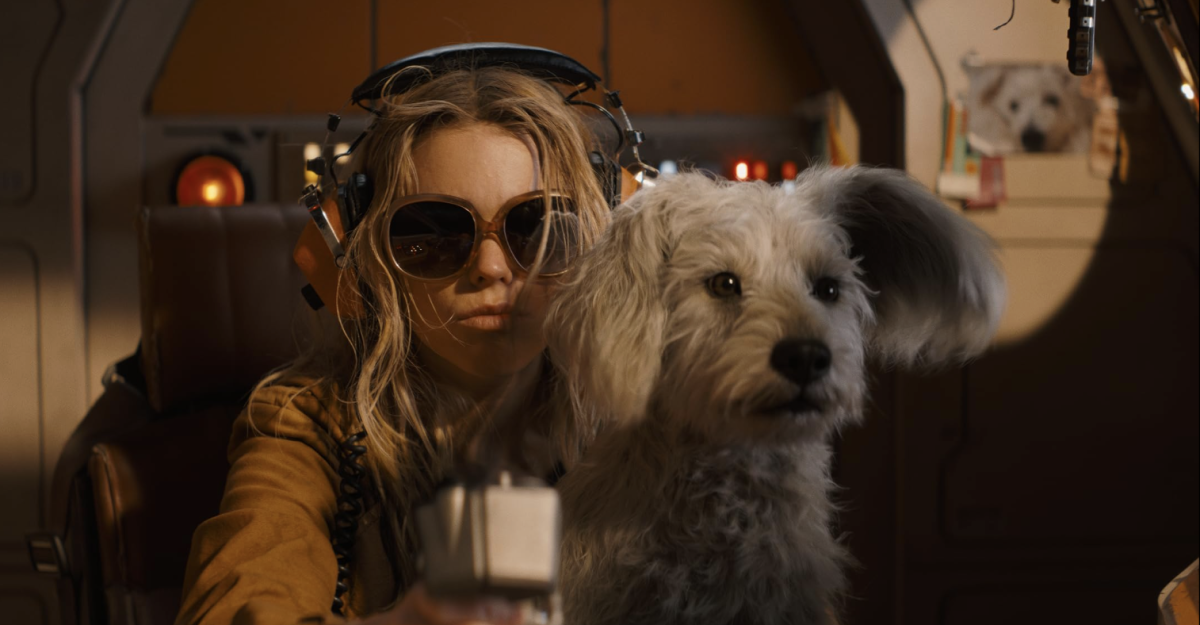
One of the more disappointing parts of the movie is Krypto. Much of the marketing centered around him, with the trailers selling the movie as a Kara and Krypto story, only for him to be barely featured in it. It feels like a bait-and-switch and, worse, a missed opportunity since Krypto was one of the most charming elements of “Superman.” Sidelining the superdog here simply feels like a waste of the time and energy that went into developing his fanbase.
The score is solid, but the movie leans too hard on slow-motion action sequences set to needle drops. It happens one too many times. It’s clearly chasing the same viral energy that “Punkrocker” gave “Superman” or that “Bye Bye Bye” gave “Deadpool & Wolverine.” It desperately wants those slow-motion moments that get clipped and shared everywhere. The problem is that once it becomes apparent that a studio is reaching for a viral moment, it stops feeling spontaneous and starts feeling like a marketing plan inserted into a movie.
This isn’t simply a theory. It is an actual strategy now. Studios have caught on to how much fan edits on social media encourage viewership, to the point that Lionsgate has started hiring the same fan editors who make those viral clips to produce official content. A good needle drop can fuel these fan edits, so scenes like these aren’t there just to develop the story, but are actually designed to be extracted, re-cut and recirculated with someone else’s audio. It’s a trend across a lot of recent blockbusters and it comes at a real cost since every minute spent engineering a viral clip is a minute not spent on character or story.
In the end, “Supergirl” is watchable, held up mostly by Alcock’s performance and Momoa’s willingness to look completely preposterous. However, it is a pretty good case study of everything wrong with big franchise movies right now: over-marketed, under-developed and too self-serious to just let itself be the cheesy comic movie it clearly wants to be.