


Experiencing the first season of “Beef” three years ago was cathartic.
Watching Steven Yeun on a phone call with his parents on KakaoTalk promising an empty future in a rundown apartment … Never had I felt such an immediate connection to a character and their story.
The devolving, ridiculous anger of the show’s first season was visceral. It’s the anger of living stuck and trapped knowing that you’ve never lived to your full potential. It’s the anger of believing that the American Dream was meant for people that look like you, that such a dream is achievable for an Asian American. It’s all the anger I’ve seen in the people around me and an anger that was starting to fill me too.
After such a strong debut, it’s hard to take the idea of a second season seriously. I certainly didn’t know what to expect at all from what was pitched as an anthology of different people’s metaphorical “beef,” especially when the first season’s beef was constructed as a creative mechanism through which to explore Asian American identity. As an anthology, the show inevitably has to evolve, and, with that, it has to create new but relevant chaos with different, bigger drama.
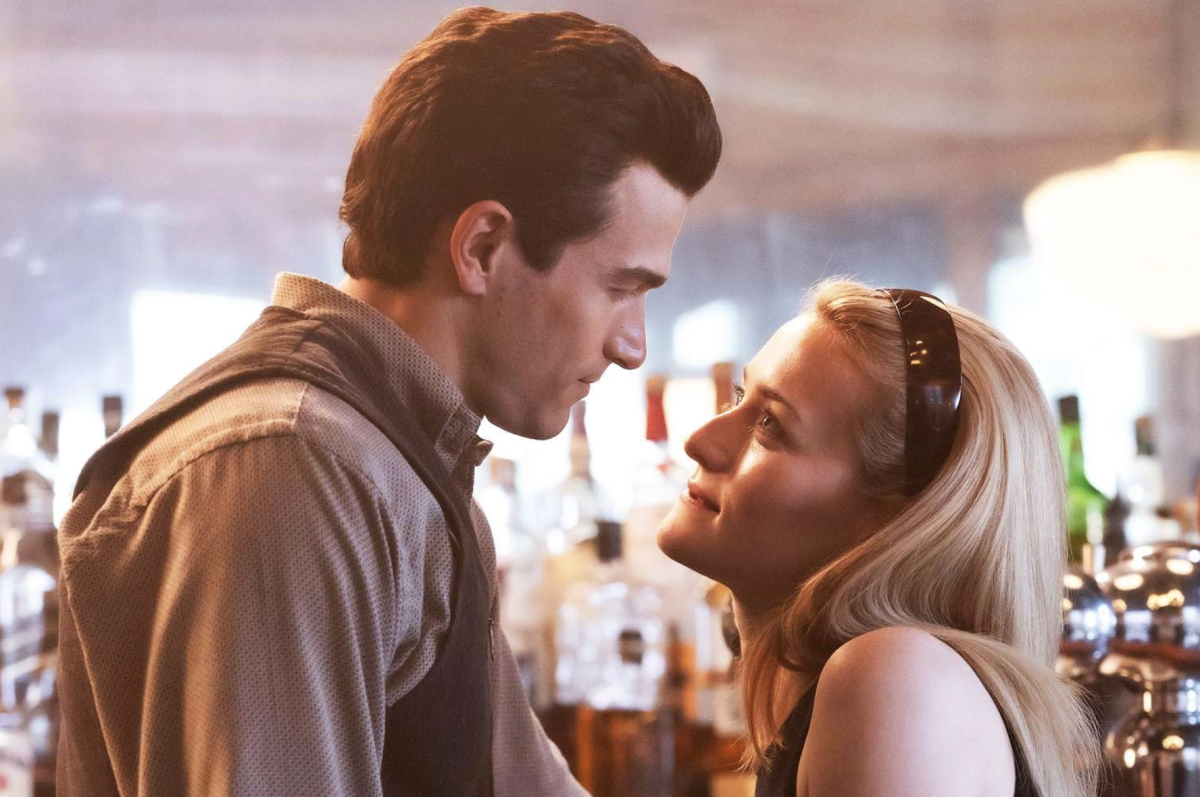
The second season of “Beef” focuses on two couples. The first is Josh (Oscar Isaac) and Lindsay (Carey Mulligan), who enjoy the connections and privilege that come from Josh’s role as a manager at a popular country club. The second is Ashley (Cailee Spaeny) and Austin (Charles Melton), who work at that same club. Their beef begins when Ashley and Austin witness a horrible fight between Josh and Lindsay.
It proves quick to be a tad too unserious. The two couples trade a couple barbs, a few petty pushes here and there, particularly from Lindsay. But, what becomes clear is that the issues that these two couples have are with their respective partners, not with the other couple. The most vicious the couples ever get with the other pair is some disgusting tampering of drinks, which is nothing compared to the heinous acts that Ali Wong’s Amy and Yeun’s Danny were committing in the previous season.
Yet this season still manages to grow massively out of control. What seemed to be a matter between these four characters turns into a corporate conspiracy in which these two couples are ultimately at odds with the power of a Korean mega-corporation.
It was a slightly baffling turn of events. I nearly had to pause the show to take a break when a supporting character got run over by a truck on the orders of the corporation’s cool leader, Chairwoman Park, played by a precise Youn Yuh-jung. The truck run-over is a staple of Korean dramas that I particularly have beef with (as my mother would say, you can’t have a K-drama without a truck). Where was the realism of Yeun with his rundown apartment and KakaoTalk?
It isn’t fair to expect “Beef” to forever remain a show about Korean American, or even Asian American, identity. Nothing and no one is ever defined solely by their identity. Yet, it’s hard to understand when a show you’ve grown to associate so closely with yourself becomes something else entirely.
Within the anger of the first season, what I saw and connected with was the feeling of “han.” A Korean word considered untranslatable, “han” is a representation of an inherent communal anger that Koreans share due their common past pain of colonialism. It’s a pain that’s a result of systematic oppression but also a pain that is defined by the individual experience stemming from living within any sort of system.
It is presumptuous to say that I could feel or understand even a tad of “han.” At the same time, what other word could describe the weight in my stomach every time I fail and I think of my parents? What other word could describe being so aware of my physical difference every time I look into a mirror? It is an experience that not only defines me individually, but is so common amongst Asian Americans. A shared pain.
For better or worse, Season 2 blows this pain to a bigger proportion. Compared to the previous season’s parting shot of just Amy and Danny, Season 2’s last frame features all the characters trapped in their own place in a circle, constantly destined to play the part they’ve been born into. It’s this realization that they can’t free themselves from the cycle that causes that constant spark to boil underneath their exteriors. It is a damning realization, nearly a curse. What was catharsis and reconciliation in Season 1 becomes acceptance and submission in the show’s second run.
There is no dramatic hurl of blood and violence. There is no more screaming and crying at the end. Indeed, maybe that is precisely why this season of “Beef” is so hard to grapple with. It is the cold awareness that there is no true release for all the pain we hold within ourselves — that, instead, we must learn to come to terms with it and simply try our best to survive.