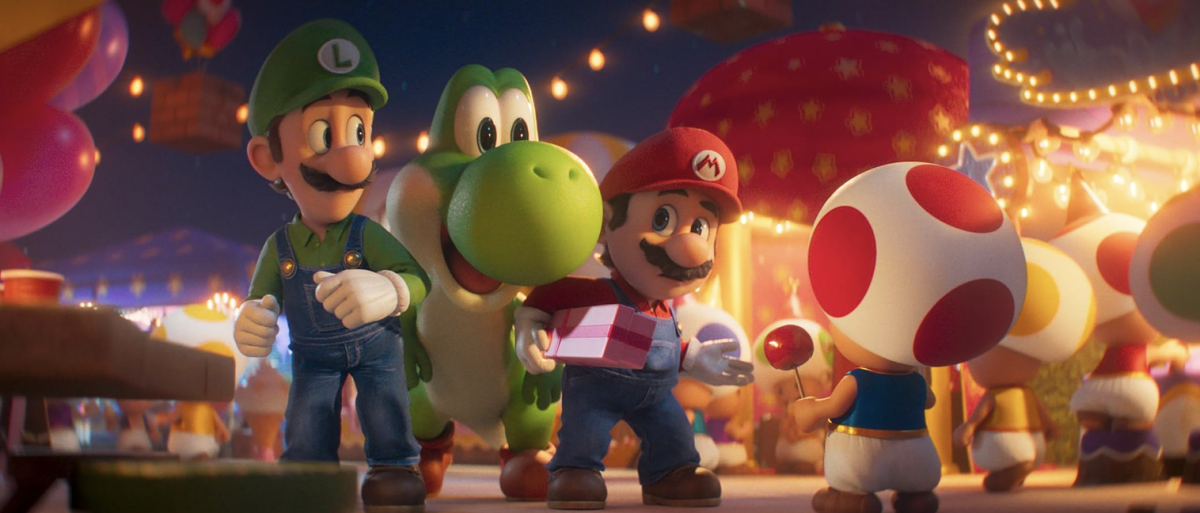
 “The Super Mario Galaxy Movie” has had so much buzz around its release that it’s hard to know where to begin when reviewing it. Not only does the movie bear the grand burden of living up to the legacy of the titular, critically acclaimed video game it is adapting, it also has to follow up its predecessor, “The Super Mario Bros. Movie,” which is one of the highest-grossing animated movies of all time. Then again, “Super Mario” is such a popular franchise that, regardless of the movies’ quality and their ability to meet expectations, they are bound to gross millions. It’s Mario Bros! It’s bound to be good, right?
Unfortunately, “The Super Mario Galaxy Movie” did the bare minimum. The movie felt like an hour and a half of jangling keys, with the characters feeling more hollow than they did in its predecessor and endless cameos shoved into a plot with very little meat on its bones.
The first half of the movie is somewhat strong with the first scene delivering a battle between the movie’s new villain, Bowser Jr. (Bennie Safdie), and the mother of the cosmos, Rosalina (Brie Larson). At the same time, Mario (Chris Pratt) and Luigi (Charlie Day) are busy helping the Tostarenans of Tosterena Town, a location taken from the video game “Super Mario Odyssey,” where they discover Yoshi (Donald Glover). From there, the trio returns to the Mushroom Kingdom, where Princess Peach (Anya Taylor-Joy) and Toad (Keegan Michael-Key) have just received an urgent SOS from Rosalina, sent by one of her lumas, Rosalina’s star children. While Princess Peach and Toad leave to rescue Rosalina, Mario, Luigi and Yoshi must watch over the miniature Bowser (Jack Black), who has been kept in the Mushroom Kingdom since his defeat in the previous movie.
If that all sounds like an absurd number of plot points and cast names to prattle off in one go, that’s because it is. All those events happen in about the first 15 to 20 minutes of the movie, leaving little room for the plot to breathe, and the rest of the movie suffers from this same pacing. Plot points follow one another at breakneck speed, and every character is flattened to become set pieces in the movie’s already flat plot. The film seems wholly uninterested in delivering on any of the ideas it introduces, whether it be Bowser’s relationship with his son, the sisterhood between Rosalina and Peach, or even something as fundamentally “Mario” as the relationship between Princess Peach and Mario. The dialogue is quippy, quotable line after quippy, quotable line, and you can forget about character motivations, because those are absent too.
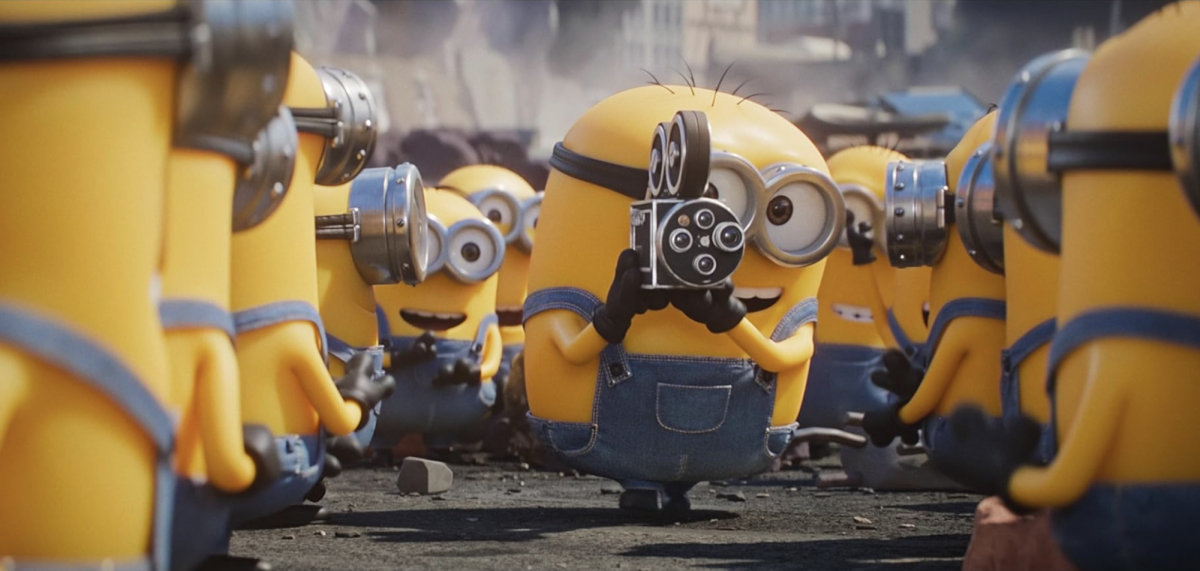
To give the film some credit, the movie’s animation and actual coherent plot sequences are stellar. The scenes depicting Peach and Toad shooting across the galaxy in a literal shooting star feel vivid and rich, and the scale of Bowser Jr.’s planet lair is impressive. The cameos are fun as well, and I can’t deny that my inner child jumped with glee at getting to see the Pikmin on the big screen, even if it was only for a couple of seconds. However, some of the cameos felt forced, and, at times, entire plot points centered around unnecessary cameo setups that felt empty.
In fact, the hollowness of the movie’s events is too widespread to ignore. A good film knows how to weave together these theatrical spectacles with genuinely good storytelling and writing, which end up giving those same spectacles more weight. “The Super Mario Galaxy Movie,” again, seems uninterested in doing so. There are entire portions of this movie which an editor could have either fully cut out or even minorly edited, and the entire plot would be left intact. The movie succumbs to this growing trend within animation to infantilize its audience, relying on shock and awe, or “jangling keys,” rather than presenting a good story.
The movie being made for kids also gives it no justification to be this incoherent. Has everyone collectively forgotten about the works of art that are “The Incredibles,” “Spider-Man: Across the Spider-Verse” or even Illumination’s own “Despicable Me”? These are so-called “kids movies” that still manage to knock it out of the park with their empathetic characters and masterful writing, something that “The Super Mario Galaxy Movie” fails to do due to its overindulgence in cameos and valuation of hype over good. Even the one character in the movie that displays any bit of personality — that being Bowser with his redemption arc — has his character progression abandoned in favor of making him the main villain toward the end, yet again, without development, explanation or justification.
When all of its forces come together, “The Super Mario Galaxy Movie” somewhat delivers on its promise of being an authentic “Super Mario Galaxy” movie, but its emphasis on motifs and cameos and its lack of any engaging plot or characters also hollow out what made the stories and nostalgia around the “Super Mario” franchise so special.