


Did you know Scott Joplin wrote an opera?
Now, you might be asking yourself a couple of questions, like “Who’s Scott Joplin?” or “Didn’t he only do ragtime?” To answer the former, he was a famous pianist and composer who wrote the famous ragtime composition “The Entertainer,” which my classically-trained piano teacher was not fond of when I asked to learn it. To address the latter question, Joplin did do ragtime, but he also wrote the semi-autobiographical opera “Treemonisha” in the early years of the 20th century, although it would be decades before it would grace the stage. Regardless of the opera’s lengthy path to production, the Washington National Opera’s (WNO) performance of “Treemonisha” provides an auditorily and visually pleasing performance despite its sometimes heavy-handed approach to its moral message on the importance of education.
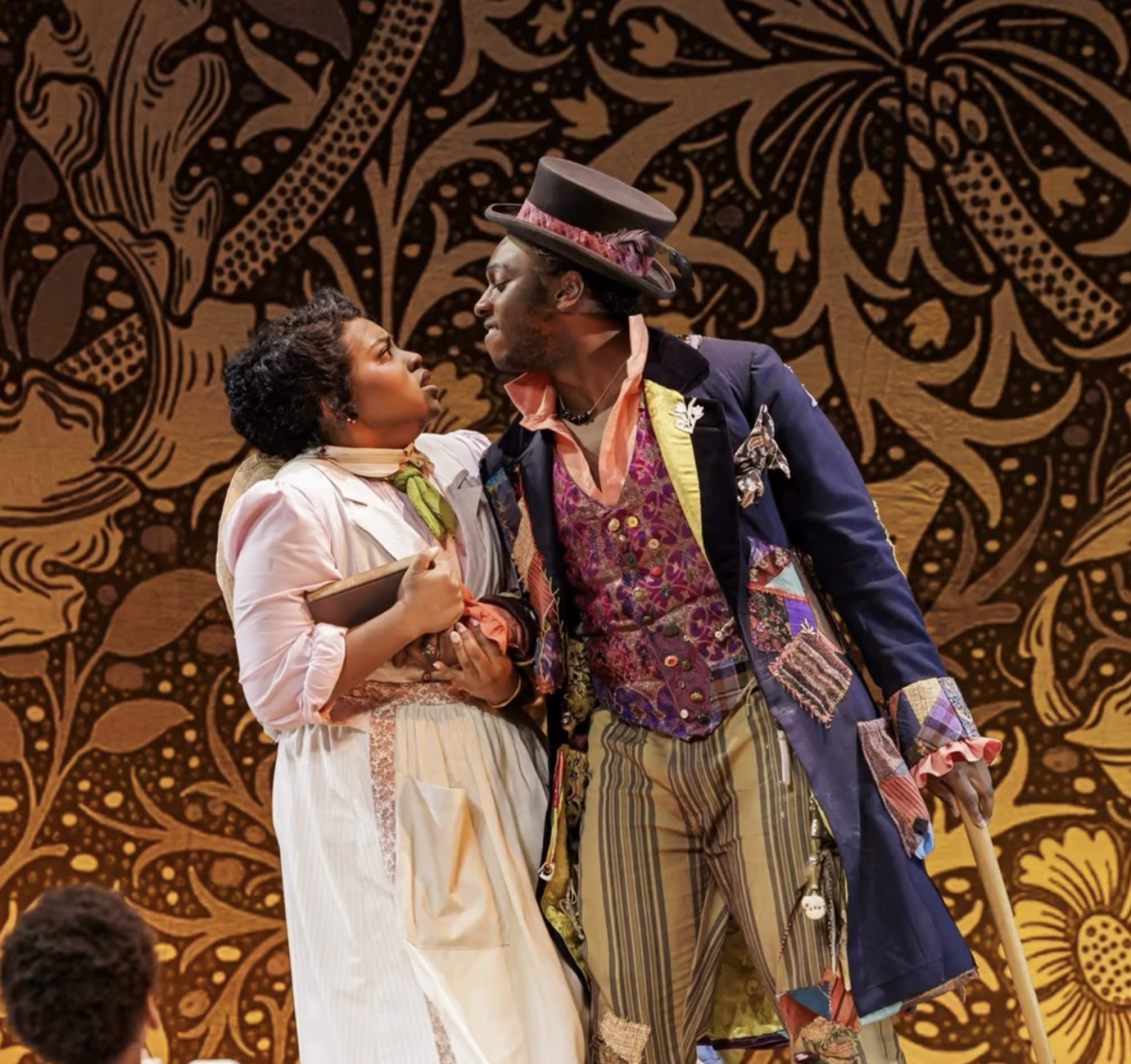
“Treemonisha” opens in Arkansas in the late 19th century, centering around the education of the titular character. An infant Treemonisha is found under a tree one day and adopted by Ned (Kevin Short) and Monisha (Tichina Vaughn) — take that, Clark Kent — before being sent off to receive an education under a white benefactress years later (and take that Pip). Returning to her community, Treemonisha’s (Viviana Goodwin) educated ways clash with the “conjurers” who prey on the superstitions of the uneducated in order to make a living. These “conjurers” are led by Zodzetrick (Jonathan Pierce Rhodes), a ghoulishly dressed trickster who sells his “bags of luck” to the people (there’s no screaming of “ZODDDDD!” here folks, sorry to disappoint). To no one’s surprise, Zodzetrick kidnaps Treemonisha and a daring rescue ensues as the brilliant Treemonisha and her enlightened ways triumph over the forces of incompetence and evil.
Dear readers, if you detect a hint of crankiness in that summary, you wouldn’t be mistaken. A small percentage of that is due to the truly unpredictable Washington, D.C. weather we have been experiencing, as well as the mild case of the Sunday scaries that accompanied me to this opera — and let me tell you, opera is not the cure. However, a larger part of my chagrin is due to the one-dimensionality that takes over the second half of this opera. The overture provides a fresh narrative approach that glides through the basic elements of the story without so much as a word being spoken, the first act is capped off by an entertaining recreation of a soulful mass and the lyricism is captivating throughout. The colorfully vibrant, flowery set design is a pleasant visual accompaniment as well, although it was eerily reminiscent of how I imagined the wallpaper to look from Charlotte Perkins Gilman’s seminal short story “The Yellow Wallpaper” several times (and who says my English degree can’t be used for anything?).
However, after slogging my way through a 25-minute intermission (the $15 beverages at the concession stand were an immediate no-go), the second act felt deflated. Treemonisha’s kidnapping is all too brief and once the bad men are caught, Treemonisha pleads not to meet violence with violence, leading to her unanimous election as community leader. The strife is incredibly short-lived and the heavy-handed and repetitive manner in which the singers extol the virtues of education over uninformed superstitions leaves the audience feeling like they are being preached at. The message itself is an important one, especially in today’s society where uninformed fearmongering and superstitions abound, making intelligence be seen as a threat (holy contemporary politics Batman!), but there was an abrupt and entirely in-your-face nature to the way in which it was relayed that did not land.
My misgivings with the story aside, I accord the opera a higher ranking than you might expect because of the circumstances that led to my attendance. The Washington National Opera was scheduled to perform “Treemonisha,” “The Crucible” and “West Side Story” at the Kennedy Center, but after a succession of controversial changes, the WNO decided to cancel all performances at the center. As they opened up “Treemonisha” at the George Washington University’s Lisner Auditorium, the director and CEO of the WNO stepped up on stage to remark humorously on the obstacles, more mountains than mole hills, that had to be overcome in order for this production to continue. The atmosphere was positively electric (despite the crowd’s median age being a generous 65) and for that alone, my opinion of this opera was greatly improved.