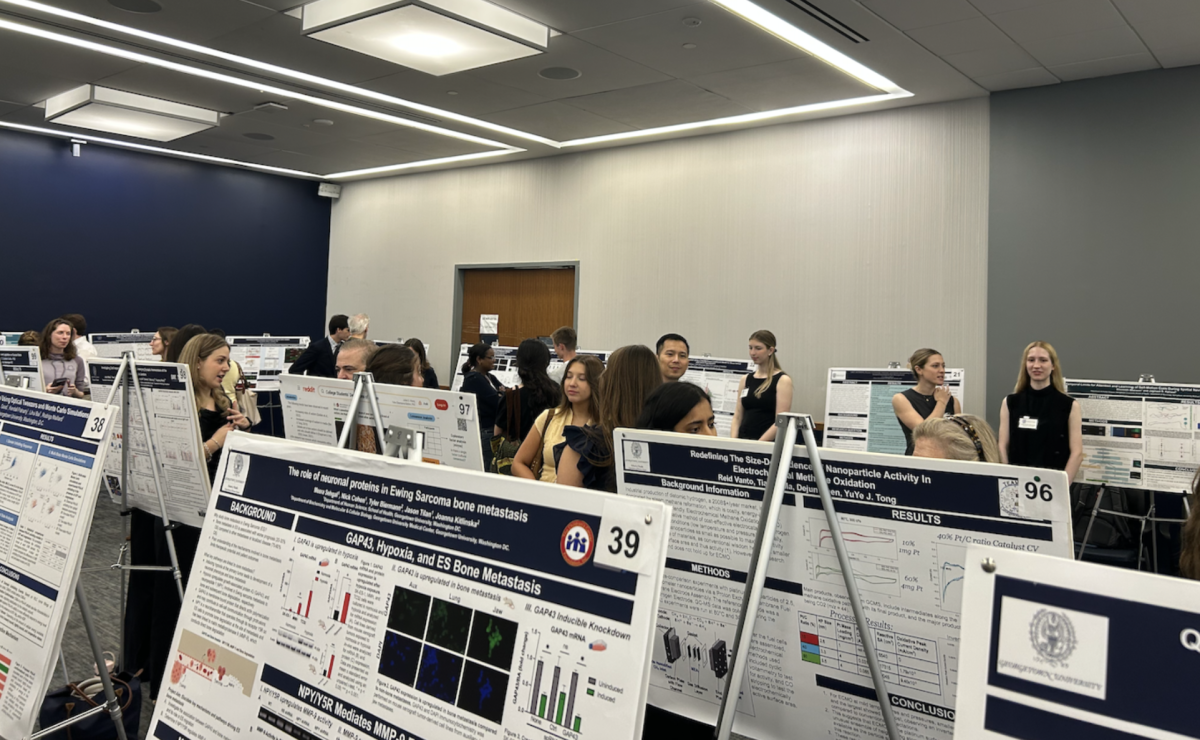


Nancy Sin, a health psychologist and associate professor of psychology at The University of British Columbia, presented her work exploring the impact of daily ups and downs on health and well-being at an Oct. 24 event.
The lecture was part of the psychology department’s colloquium series, which features speakers from inside and outside the Georgetown psychology department. Sin explained the relationship between emotional stressors — positive and negative — and our health and experiences.
Sin said daily events are rarely entirely positive or negative.
“The thing that I found really surprising was that 34% of days, people report at least one stressor and at least one positive event,” Sin said at the event. “And I think that’s what this is reflecting, is that it’s pretty typical for adults to just have these days that are really full and that maybe having a lot of stressors means that you have an active and engaged life, but that opens you up to both stressful and positive experiences.”
Sin said this events-based approach is important, not only for understanding how these negative events interact with emotions and the environment people are in, but also for considering positive events.
“If we were thinking about how stressors unfold in daily life, you might also think about things like pile up, having multiple stressor events that pile up across the day, or across multiple days or even longer periods of time. But I am interested in also unpacking this for positive events,” Sin said.
Jessica Chiang, an assistant professor in the psychology department, said this process brings a new perspective to this study of stressors and positive emotions.
“Her work brings a very nuanced perspective to the study of stress and resilience and reminds us that the small, everyday, mundane experiences that we have can have profound, long-term impact on our physical health,” Chiang said at the event.
Sin added that it is especially important to focus on positive events because they can help buffer the effects of negative events throughout the day.
“It’s thought that positive emotions could help to allow people to be less reactive to stressors. So that’s like a buffering effect, or promotes faster recovery following stressor exposure,” Sin said.
Niyat Theodroes (CAS ’27), a student who attended the event, said she appreciated the focus on positive events, compared to what she has been learning about in her psychological disorders class.
“We have been focusing on depression and mood disorders, so looking at mood and emotions from the perspective of positive feelings instead of negative ones felt like a completely different approach,” Theodroes wrote to The Hoya. “It was interesting to hear about her research and how the amount of positive emotions we experience or report can actually have an impact on us.”
Full disclosure: Niyat Theodroes currently serves as a science writer for The Hoya.
Sin said sleep is an equally important element of well-being that she considers when inspecting positive and negative events.
“There are aspects of this that I think are really relevant for students, like when sleep gets really disrupted,” Sin said. “Your cycle kind of gets very shifted — there could be a lack of regularity, especially on weekends versus weekdays.”
Sin said no matter the amount of sleep one gets, individuals will still experience an increased negative effect in the face of a stressor; however, people who sleep better experience a smaller dip in their positive affect when faced with a negative event.
“If you have one hour longer sleep duration than you typically would, then the next day, if you have a positive experience, you actually emotionally benefit more from that positive experience,” Sin said. “And so this is kind of showing to us that people are getting more out of their lives, they’re benefiting more from positive experiences when they’ve had more sleep.”
Sin added that, during the pandemic, she was interested in the impact of increased everyday discrimination on positive and negative emotions.
“People who experience more experiences of everyday discrimination or unfair treatments tend to have more health risks, including poor sleep, higher blood pressure, dysregulated cortisol, metabolic risks and even measures of accelerated aging, like shorter telomere length,” Sin said.
Sin said positive events experienced throughout the day lead to overall decreased cortisol, the hormone released in response to stress, as well as better health and well-being.
“I found that people who experience more positive events tend to have a steeper diurnal cortisol slope across the day. So it’s kind of like a healthier profile,” Sin said. “People who experience more positive events also have lower levels of inflammation and they have better sleep.”