
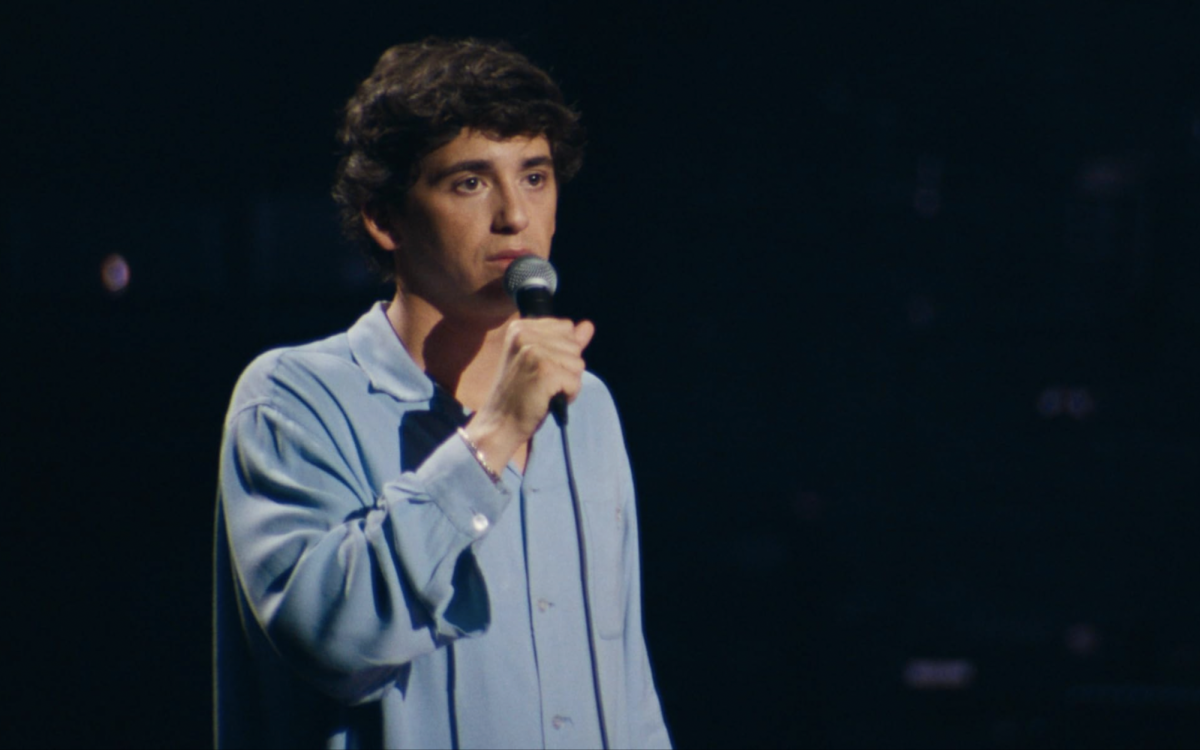

In his debut stand-up special “American Boy,” Marcello Hernández unabashedly explores who he is and where he comes from through stories from his childhood in Miami to tales of culture shock in University Heights, Ohio. In his special, which debuted on Netflix on Jan. 7th, the Gen Z “Saturday Night Live” cast member invites viewers to get to know him through the personal setting of stand-up.
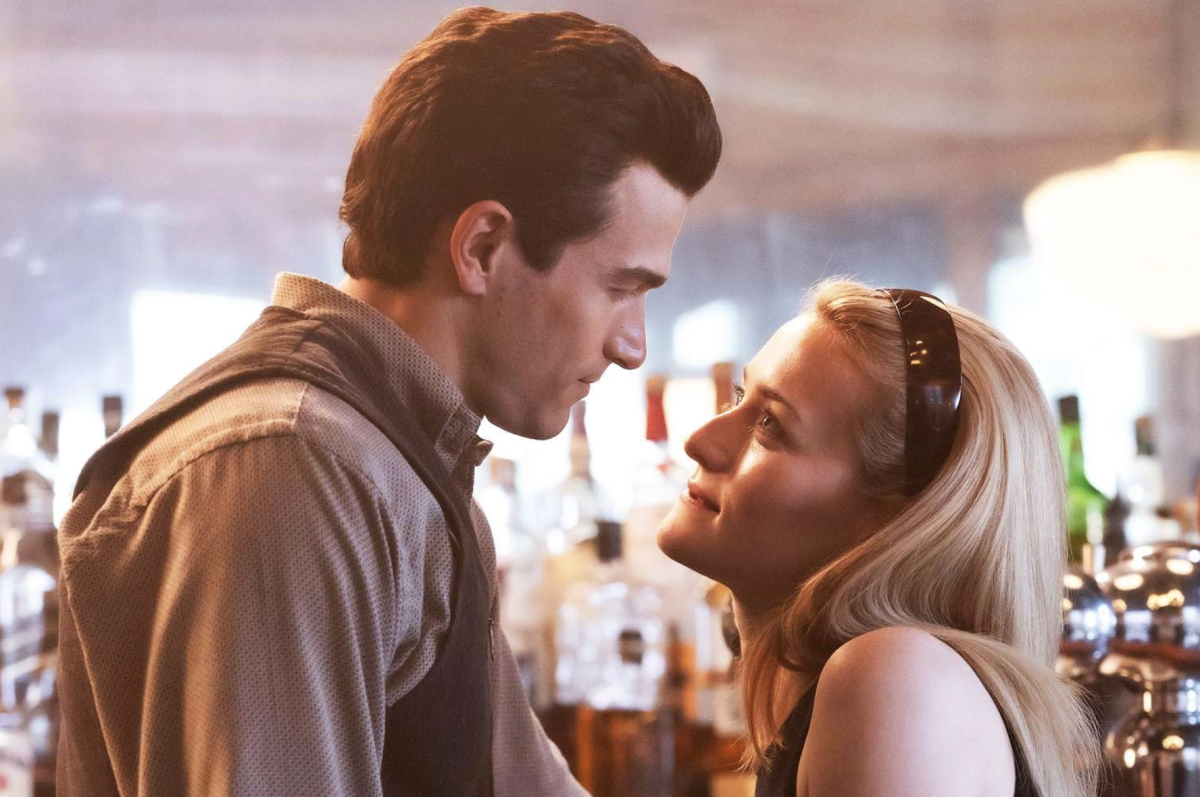
Hernández has been an “SNL” regular since 2022, finding huge success on the show. He is most known for his recurring character, Domingo, who first appeared in the “Domingo: Bridesmaid Speech” sketch featuring Sabrina Carpenter on Oct. 12, 2024, which now has over 20 million views on YouTube. Domingo has been the focus of three subsequent sketches and even starred in one for “SNL50: The Anniversary Special.”
The one-hour-long Netflix special “American Boy” marks Hernández’s first televised venture into the stand-up space, focusing heavily on his family, upbringing and Latin-American heritage. By opening the special by having his mother, Isabel Cancela, introduce him, Hernández preemptively establishes that she is a major supporter of his comedy. This sets a precedent that keeps Hernández’s sometimes unfavorable portrayal of his mother’s parenting and childhood lighthearted and funny rather than eyebrow-raising.
Hernández is at his strongest when telling a story, using frequent anecdotes to convey his character and talented rhythm as a comedian, favoring humorous, relatable situations over explicit punchlines. A standout moment was his recounting of accompanying his mother to various beauty appointments as a child, because he “had a single mother and I didn’t listen good.” The recurring motif of Hernández’s inability to listen is a tool used to link seemingly unrelated stories, giving the set cohesion. Much of his storytelling revolves around his experience with unmedicated ADHD through childhood to adulthood, making “American Boy” a quintessential get-to-know-you comedy debut.
Where the special distinguishes itself most clearly is in Hernández’s portrayal of women. Male comics have long made women the butt of their jokes or casually degraded their female partners in the name of comedy. Hernández makes it a point to repeatedly mention that he grew up surrounded by women. His most precise and hilarious observation of the female psyche was his accurate satirization of the “violence” of beauty rituals. Brazilian waxes, eyebrow tweezing and the application of eyeliner through tears, Hernández points out, are brutal actions, directly contradicting the portrait of delicate femininity they attempt to achieve. Hernández does what few male stand-ups can: He writes jokes about women that would still be funny if they were told by a woman.
The special’s weaker moments lay in areas Hernández simply has yet to fully refine, likely due to growing pains in a format not wholly familiar to him. At times, certain jokes dragged on for minutes after their natural end, with no punchline strong enough to justify their continuation. This tendency also lends itself toward a choice that is overused in Hernández’s comedy — his frequent use of yelling or exaggerated emotion as a punchline in and of itself. This approach can only work to a certain extent, as it risks crossing the line between comedic howling and distracting, grating noise.
The most important and poignant aspect of Hernández’s comedy is his unapologetic pride in his Cuban heritage. He goes further than satirizing growing up in an immigrant household, though he uses storytelling to confront anti-Latino racism in the United States. Through these stories, he explicitly rejects the narrative being pushed by the federal government and U.S. Immigration and Customs Enforcement (ICE) that Latino immigrants are a danger to our nation’s safety. His closing joke contrasts “white people crimes” as the crimes that belong in documentaries with “Latino crimes” as action movie material. This joke, no matter how lighthearted, exposes how right-wing media minimizes violence committed by white, natural-born citizens in attempts to justify mass deportation.
To conclude the special, Hernández looks directly into the camera, responding to ICE’s removal of Latino immigrants from the United States, and says, “we’ll be back.” Hernández’s promise leaves the viewer with a sense of hope rather than despair. As the only Latino cast member on “Saturday Night Live,” Hernández is an important figure for the representation of Latino-Americans in comedy. The title of his special, “American Boy,” affirms both identities of his Cuban American community as just that — undeniably American — despite constant, violent efforts to portray them as outsiders.