

We have all been there — someone pulls out “We’re Not Really Strangers” at a party, and suddenly everyone is sharing things they should probably be saving for therapy. The unspoken rule is that unfiltered honesty, no matter how uncomfortable, can only bring people closer together. “The Drama” spends nearly two excruciating hours asking what happens when it doesn’t.
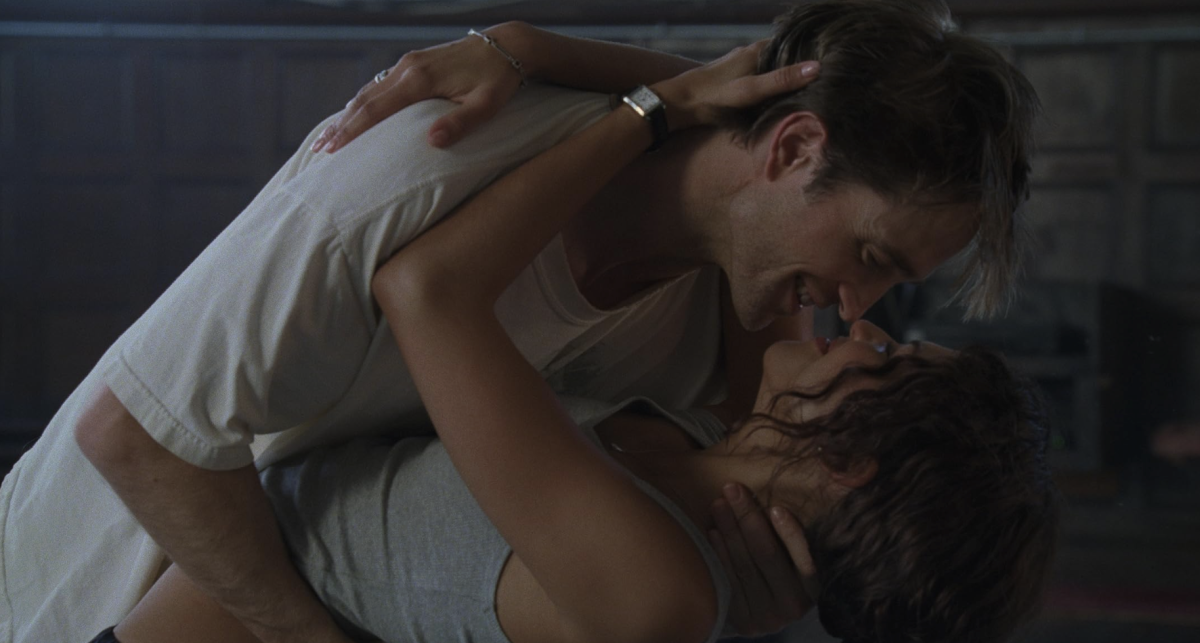
“The Drama” follows an engaged couple, Charlie Thompson (Robert Pattinson) and Emma Harwood (Zendaya), in the week leading up to their wedding. The two share a meet-cute at a coffee shop and proceed to get engaged. But, when a pre-wedding conversation with their best man (Mamoudou Athie) and maid of honor (Alana Haim) turns to their worst moments in life, Emma reveals something that throws both their relationship and their upcoming wedding entirely off the rails.
The acting is the film’s clearest and most undeniable highlight. Zendaya’s performance is what completes the movie; her work in the film ranks among the best of her career, and the same can be said for Pattinson. There is a particular skill in making an audience feel deeply uncomfortable while keeping them glued to the screen, and both leads manage to strike this exact balance. Their chemistry is electric in the quieter moments, and their unraveling is particularly painful to watch. The two actors perform at the height of their abilities, ultimately saving the film from its demise as a story that does not quite match their commitment to it.
The script is well-written in the sense that it is intentionally unsettling and painful to get through; the dialogue feels realistic, and characters are cleverly written to be disliked by the audience. Director Kristoffer Borgli clearly knows how to build tension, and there are stretches of the film where the dread is almost unbearable, in the best way possible.
The film’s central problem is the characters themselves, who, despite being well-written, remain frustratingly shallow beneath all of the tension. The relationship between Emma and Charlie is explored too briefly — only through a run-through of Charlie’s wedding speech in which he talks about their relationship — so there is very little emotional investment built before everything starts to fall apart. In fact, it is difficult to understand Emma and Charlie’s reactions in the wake of their imploding relationship because the audience is unfamiliar with their typical behavior. You are watching two people fall apart without ever having really met them, which blunts the impact of what should be some of the film’s most devastating moments.
Then there is the elephant in the room. Emma’s confession — that she had nearly committed a school shooting in her high school, going as far as practicing firing a rifle and losing hearing in one ear as a result — is the film’s central emotional rupture. That hearing loss plays a significant role in her first meeting with Charlie is a quietly clever detail that ties her past and present together.
The revelation is followed by the expected outrage, and Emma’s explanation traces her path from severe depression and online gun violence forums to eventually becoming an advocate against gun violence after witnessing the effect of another mass shooting on her community. It is a compelling arc, one that gestures at the complicated and non-linear ways that trauma and violence intersect in American culture.
There is something genuinely worth examining about Borgli, a Norwegian screenwriter and director, deploying a mass shooting as a narrative shock value and then declining to actually engage with it. There are threads of potentially nuanced discourse, such as the brief mention of online communities radicalizing vulnerable people and the pointed choice to cast a Black woman as Emma, which carries its own set of implications that the film seems aware of but unwilling to unpack. Neither idea is meaningfully developed. The result makes the film seem less like a complex portrayal of American trauma and more like an exploitation of it, the kind of thing that mistakes discomfort for depth and provocation for insight. It is a frustrating missed opportunity, particularly because the bones of something smarter are clearly there.
The soundtrack and cinematography are, like the performances, a genuine strength. Both work in service of the film’s deeply unpleasant atmosphere, with the camera’s movement carrying an almost nauseating quality that suits the story well. Borgli has a real eye for visual unease, and there are moments in this film that linger long after the credits roll, bringing to my body a visceral cringe as I still sit with them.
There is, however, one odd scene with an adult Charlie caressing a young Emma (Jordyn Curet) that lands as distinctly odd, made even more uncomfortable in the light of age-gap relationship allegations that have followed Borgli off-screen. Whatever the motivation behind the scene may be, it casts a strange shadow over an already strange film.
“The Drama” is not a bad movie. It is, in many ways, genuinely impressive — ambitious, technically accomplished and anchored by two incredible performances. However, ambition is not the same as execution, and a film that raises this many serious questions and answers almost none of them has quite earned its provocations. What keeps you watching, beyond Zendaya and Pattinson’s sheer magnetism, is the relationship itself, which, despite everything, you still find yourself rooting for in a way that is hard to fully explain.
Would I watch it again? Absolutely not. It is nearly two hours of sustained, anxiety-inducing chaos that feels like a slow-motion train wreck you cannot look away from. However, despite its faults and the intense discomfort, I honestly kind of loved it regardless, though I am still not entirely sure why.